The Measure of Marrow Creek
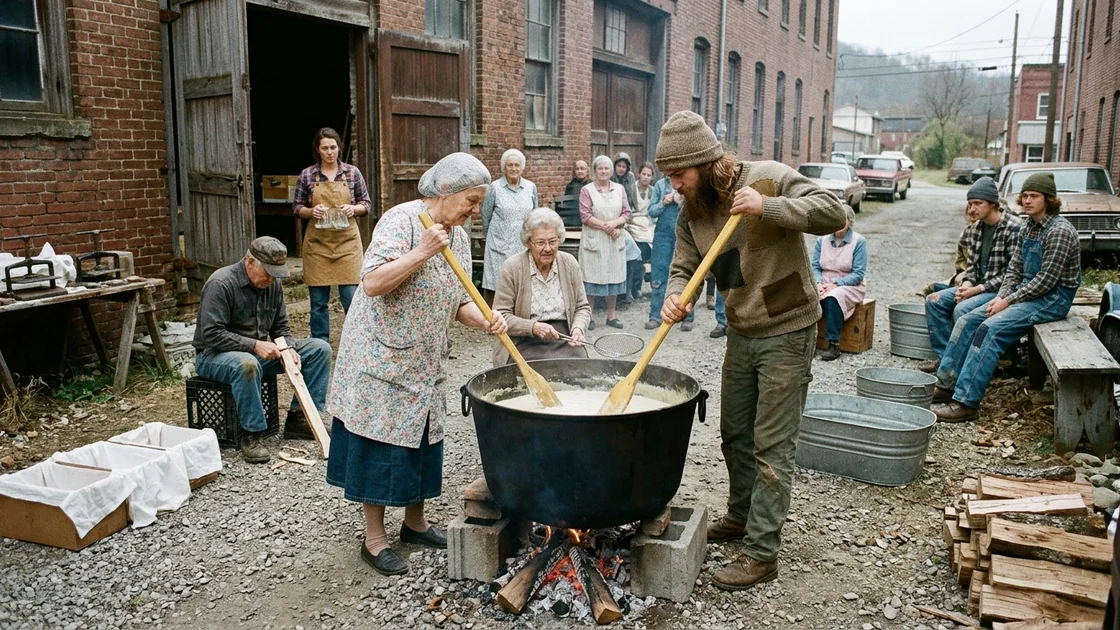
When Clara Vance moved to the fading valley town of Marrow Creek to open a package-free bulk refillery, she was met with cold glances from lifelong residents who viewed her venture as an overpriced city fad. The town was already fractured between aging, churchgoing homemakers surviving on tight pensions and a newer influx of back-to-the-land youths living in the hills. Through the quiet mechanics of tare weights, bulk vinegar, mended flour sacks, and soap cauldrons, Clara inadvertently created an altar of shared necessity where the stubborn thrift of the town elders collided with the ecological anxieties of the young, binding two hostile generations through the ancient, forgotten art of using things until they were entirely worn away.
The floor of the old Miller Hardware building sloped three inches from the front display window to the loading door in the rear, a casualty of the 1978 creek swell that had settled the center joists into the valley mud. When Clara walked across the bare yellow-pine planks, her boots produced a steady, rhythmic creak that sounded like a dry pump handle being worked in an empty cistern.
Outside, the town of Marrow Creek sat under a sky the color of zinc. Main Street was three blocks of pitted asphalt flanked by buildings that had slowly surrendered their commercial lives between the closing of the foundry in 1994 and the opening of the bypass dollar store six miles out on State Route 9. There was Silas Greeve’s small engine repair, which smelled permanently of two-stroke exhaust and stale tobacco; the True Value, which had lost half its shelf space to greeting cards and fading lawn ornaments; the diner, where the grease trap groaned each Tuesday morning; and twenty-six empty storefronts with sun-bleached butcher paper taped inside their windows.
Clara spent two weeks scraping the paper from her own panes. Her fingernails were constantly black with dried adhesive, and her shoulders burned from the stepladder work, but she wanted people to see in. She did not want Marrow Creek to imagine what was arriving; imagination in economically exhausted hollows was almost always dark, protective, and cynical.
She set up her fixtures. They were not the sleek, blond-birch plywood units favored by the lifestyle refilleries she had studied in Portland and Burlington. Those required capital she did not possess, and besides, they looked too much like Scandinavian clinics. Instead, she had bought six salvaged heart-pine barn tables from an estate auction down in Mercer, scrubbed them with boiling water and soda crystals until the grain stood out like corded muscle, and leveled them on the slanting floor using off-cuts of cedar shingle.
Upon these tables she arranged the gravity bins and the carboys. There were eight clear glass dispensers filled with rolled oats, green lentils, split peas, pinto beans, red winter wheat berries, coarse cornmeal, pearled barley, and short-grain brown rice. Beside them stood three stainless steel fusti tanks with brass spigots, containing cold-pressed sunflower oil from a farm forty miles north, raw apple cider vinegar, and distilled cleaning vinegar. Along the western wall, beneath the tin ceiling panels that had oxidized to a pale, lichenous green, sat the fifty-five-gallon drums of castile base, vegetable glycerin, and liquid laundry soap scented only with sweet orange rind.
Over the lintel, she had painted the sign herself with black Japan varnish: The Well & Measure. Bulk Provisions & Dry Goods.
Silas Greeve was her first visitor, though he did not enter as a customer. He came across the street with a red plastic oil can in one hand and a brass drift in the other, letting the screen door slap shut behind him with the peculiar, whip-crack clap of a tired spring.
He stood just inside the sill, his grease-stained cap pushed back on his graying crown, looking at the glass bins as if they might contain live vipers.
"You got a license for dry storage?" he asked. His voice sounded like gravel being kicked down a galvanized culvert.
"Commercial retail food permit from the county health department, Silas," Clara said, wiping down the zinc counter she had hauled from her grandmother's summer kitchen. "Pest inspection passed on Thursday. Weights and measures came yesterday to certify the Toledo scale."
She patted the great, double-faced dial scale that sat in the middle of the counter. It was a 1954 model she had rescued from a defunct grain elevator, stripped down, re-calibrated, and balanced until the black needle floated over the zero mark with the delicate fidelity of a compass pointing north.
Silas squinted at the counter, then at the rows of empty amber glass Boston round bottles, the stacked cotton muslin sacks with cotton drawstrings, and the neat ranks of stainless-steel funnel sets.
"People don't buy oats out of a tube, girl," he said, not unkindly, but with the flat authority of a man who had watched five diners, two shoe stores, and a dry-cleaning plant fail within spitting distance of his curb. "They buy them in a round red cardboard box with the picture of the Quaker on the front. Two for four dollars when the truck runs on Wednesday. What’s that?"
He pointed a thick, yellowed thumb toward a display of woven sisal soap-saver pouches hanging from a copper rail.
"Sisal," Clara said. "You put your scrap ends of bar soap inside it. When you wash, the fiber lathers up and exfoliates, so you don't throw away the slivers."
Silas stared at the little pouches. His jaw worked on nothing. "My mother used an old nylon stocking tied to the pump handle," he said.
"That works too," Clara said evenly. "Unless you don't wear nylons."
Silas let out a dry, clicking breath that might have been a laugh if there had been any humor behind it. He looked back out at the gray street, where a semi-trailer loaded with poultry crates rumbled past, heading toward the processing facility twelve miles south, leaving the smell of ammonia and wet feathers hanging in the drafty air.
"You're going to lose your shirt, Clara Vance," he muttered. "The young ones out on the ridge don't have twenty dollars between the six of them, and the women down in the flats have been saving their plastic margarine tubs since the Carter administration. Nobody's paying you to be poor. Being poor here is free."
The first month proved Silas mostly right, though not in the way Clara had anticipated.
The division in Marrow Creek was not merely geographical, though geography marked it clearly enough. The "ridge people" were the newcomers—twenty-somethings and early-thirties transplants who had trickled into the county over the last seven years, occupying off-grid cabins, falling-down tenant farmsteads, and converted school buses along the hemlock-choked spine of Hogback Ridge. They grew garlic, kept heritage breed turkeys that routinely died of blackhead, spoke in the earnest, breathless vocabulary of carbon offsets, soil biomes, and mutual aid, and wore hand-dyed wool sweaters that smelled like sheep grease and damp woodsmoke.
The "valley people" were the descendants of the limestone quarry workers, the timber cutters, and the rail crews. They lived in small, aluminum-sided ranches and steep-gabled Victorians with sagging front porches along the creek banks. Their yards were neat, their mowers were kept running long past their mechanical lifespans through sheer spite and JB Weld, and their domestic economies were guarded by an informal council of elderly women whose social life orbited the First Baptist Church and the auxiliary branch of the county historical society.
The ridge people discovered The Well & Measure on Clara’s third day.
Rowan and Chloe arrived in an ancient diesel flatbed that ran on used fryer oil and shuddered so violently when it shut down that the tools in the truck bed rang like church bells. Rowan was tall, sinewy, with a beard that reached his collarbone and a knitted beanie worn high above his ears despite the May warmth; Chloe wore bib overalls over a linen shirt, her arms mapped with light blue scratches from clearing wild blackberry.
They entered the shop with an air of breathless vindication, as if Clara had built a chapel specifically to confirm their private theology.
"Finally," Rowan said, stepping across the thresholds with reverence, his hand instantly going to the smooth surface of the olive-oil fusti. "A decentralized distribution point. Look at the grain selection, Chloe. She’s got red winter wheat. Is this non-GMO certified?"
Clara came from behind the counter, a bleached canvas apron tied around her waist. "It’s grown by the Miller family over in Conneaut. It’s uncertified, but they don't spray after the boot stage. I have the harvest logs if you want to look at them."
"Local provenance is more vital than corporate certification anyway," Rowan declared, pulling a crumpled cotton tote bag from his hip pocket. "The carbon footprint of third-party auditing bodies is an invisible externalization. Do you carry bulk nutritional yeast?"
"Not yet," Clara said. "The minimum order from the distributor in Pittsburgh is two hundred pounds. I don't have the turnover for it."
"We can get the collective to commit to fifty," Chloe said, leaning over the bins. Her eyes were bright with a consumer hunger that had nowhere to go in the county True Value. "We’ve been driving all the way to Ithaca twice a year to get our bulk pantry staples. It’s an ecological travesty, three hours of highway transit just to get unscented sodium percarbonate."
They spent two hours in the store. They inspected every jar, smelled the cedarwood shavings, discussed the geopolitics of cold-pressed neem oil, and asked Clara if she had considered running the shop as a worker-owned syndicate with a sliding-scale equity model for indigenous residents.
When they finally came to the counter, their haul consisted of a quarter-pound of lentils, three ounces of castile soap pumped into an old amber beer bottle Rowan had produced from his coat, and two wooden-handled pot scrubbers made of union fiber.
The total was four dollars and twelve cents.
Rowan paid with a five-dollar bill so limp and soft it felt like flannel, waved away the eighty-eight cents of change as a "contribution toward community infrastructure," and walked out into the afternoon sun feeling like a partisan who had successfully smuggled supplies across an enemy border.
Clara smoothed the five-dollar bill with the side of her thumb, dropped it into the cast-iron till, and looked out the window.
Standing on the opposite sidewalk, outside the post office, were Martha Higgins and Enid Vance. Enid was Clara’s great-aunt by marriage, a woman of seventy-eight whose knees had been replaced twice and who still canned two hundred quarts of green beans every July because she did not trust the power grid, the federal government, or the grocery store supply chains that had failed for three weeks during the blizzard of 1996.
Martha Higgins was sixty-nine, the widow of a school superintendent, and the organist at First Baptist for forty-two years. She held a plastic grocery bag from the Dollar General in each hand. The thin, white polyethylene bags were stretched translucent by the weight of two-liter bleach jugs, their handles biting deep into her white-knuckled fingers.
Martha was looking across the street at Clara’s front window. Her face was set in the hard, impassive lines that valley women used when looking at tax assessments, out-of-state license plates, or girls who had gone away to college and come back with short hair and opinions about municipal composting.
She watched Rowan climb into the shuddering flatbed. She watched the plume of vegetable-oil smoke billow from the tailpipe—smelling faintly of old french fries and rancid lard—and drift across the war memorial in the town square.
Then she shook her head, turned her back, and walked down the hill toward the lower street, her plastic bags rustling against her polyester slacks with the steady, dry hiss of dry grass in winter.
The reality of bulk retail in a cash-poor town is governed by the brutal mathematics of tare weight.
Clara spent her mornings checking the balances. A customer brings in a jar—a mayonnaise jar, a pickle crock, an old plastic peanut butter tub, a swing-top cider bottle. Before a single grain of rice or drop of liquid enters that vessel, the empty container must sit upon the Toledo scale. Its weight must be marked with a grease pencil upon the glass or recorded on a blue paper sticker: Tare: 0.64 lbs.
Then the vessel is filled. It returns to the scale. The total weight is registered; the tare is subtracted; the customer pays only for the net contents.
The problem, Clara discovered by the third week of May, was that the people who understood the ecological virtue of this process had no money, and the people who had fifty-dollar bills folded inside their vinyl pocketbooks thought it was a swindle designed to charge them twice for mayonnaise jars they had already bought from the A&P in 1982.
"She’s selling second-hand jars for a dollar fifty," Martha Higgins remarked to the circle at the Tuesday quilting guild in the basement of First Baptist. The room was cool, smelling of damp limestone, furnace oil, and the lemon glaze from a Duncan Hines cake sitting on the folding table.
"They aren't second-hand, Martha," Enid Vance said, her needle flashing through a layer of cotton batting. "They're Weck jars. From Germany. They have the little glass lids with the red rubber rings."
"A canning jar that won't take a standard two-piece Kerr lid is an abomination," Martha said without looking up from her corner square. "You can't get those rubber bands at Silas's store. If you can't buy the seals at the hardware store when the beans are coming off the vine at five in the morning, the jar is just a fancy dust-catcher. It’s show-off glass."
"She has white vinegar in bulk drums," Enid noted softly. "Forty cents a pint."
Martha stopped her needle. Her small, clear blue eyes moved over the gold-rimmed bifocals perched on the tip of her nose.
"White vinegar?"
"Distilled. Ten percent strength. Not that five percent dishwater they sell out at the highway store."
Martha sniffed, her needle resuming its rhythmic, surgical punch. "Ten percent will burn the skins right off pickling cucumbers if you don't cut it with spring water. My mother used ten percent when we did the hogs. Cleaned the lard kettles with it."
"That's what she’s selling it for," Enid said. "Cleaning. Said the girls from the ridge come in to buy it to wash their hair."
A sharp, collective gasp fluttered around the quilting frame, followed by a dry ripple of chuckles from the women who remembered when hair was washed with rain-barrel water and borax because there was nothing else.
"They smell like salad dressing, then," Martha said with finality. "The whole lot of them smell like an oil-and-vinegar cruet. It’s an affectation. Being poor isn't a project, Enid. It’s just what happens when the mill shuts down."
The breakthrough did not come from ideological persuasion, nor did it come from Clara’s educational chalkboard displays on the Pacific Garbage Patch, which she quickly realized had less relevance to Marrow Creek than the price of off-road diesel.
It came because the supply chain for regional discount distribution broke down in the second week of June.
A severe convective storm system swept through the Midwest, derailing fourteen cars of an intermodal freight train near Fort Wayne and tearing down three miles of three-phase transmission line along the primary trucking corridor into the valley. The Dollar General on the bypass remained dark for four days; its refrigerated cases, packed with processed cheeses, margarine, and plastic jugs of low-strength vinegar, warmed until the milk souring inside the plastic caused the thin jugs to bloat like dead sheep.
On Thursday morning, the pickling cucumbers in Martha Higgins’s garden came on with a sudden, violent abundance that only four days of seventy-degree rain followed by eighty-five-degree sun could produce.
Clara was standing behind the zinc counter at eight in the morning, grinding oats into flour for an elderly beagle owner whose dog had digestive issues, when the front screen door opened with its sharp, familiar smack.
Martha Higgins stood in the entry.
She was wearing a floral-print cotton smock over her denim skirt, her silver hair pulled back in a hairnet so fine it was invisible until the morning light caught it from behind. In her left hand she carried two five-gallon plastic buckets, bright orange, bearing the logo of a national home-improvement warehouse. They were pristine, scoured inside until the plastic was dull.
She did not look at Clara. She looked at the floorboards, then at the scale, then at the big blue polyethylene drum with the stainless-steel lever pump mounted in its bung hole.
"Enid said you have ten percent," Martha said. She spoke as if she were giving her name and address to a magistrate after being caught speeding.
"I do," Clara said, turning off the grain mill. The high-pitched whine died down, replaced by the deep, cool silence of the high-ceilinged room.
"Is it petroleum-derived acetic acid or fermented grain?"
Clara blinked. She had prepared herself for questions about microplastics, marine toxicity, and carbon sequestration from the ridge residents; she had not expected an elderly Baptist church organist to ask about the chemical feedstock of industrial acid.
"It’s grain-fermented," Clara said. "Distilled from regional corn mash down near Lancaster. It’s food-grade before reduction, but I sell it labeled for technical and cleaning use because my retail license here doesn't cover commercial food packaging from the drum."
Martha walked over to the barrel. She set the two orange buckets on the floor with a hollow thump. She bent down, took the bung wrench that Clara had laid across the top chime, and picked it up. Her hands were broad, spotted with liver spots, but the knuckles were thick and the grip was sure.
"Open it," Martha said.
Clara unthreaded the bung. Martha leaned over, wafting the air above the hole toward her nose with three short, decisive sweeps of her palm—an old chemist’s trick, or an old canner's instinct.
The vapor was fierce. It smelled like raw apple juice that had gone through hell and come out clean on the other side, sharp enough to tighten the salivary glands in the back of the jaw.
Martha nodded once. "It’s grain. That chemical slop they sell in the plastic gallon jugs at the mart has a kerosene tail to it if you boil it down for chow-chow. You can’t make a decent sweet pickle with it; it turns the skins soft by Thanksgiving."
"How much do you need, Mrs. Higgins?"
"Six gallons," Martha said. "The vines are dropping eighty pounds of Kirby cucumbers this morning, and if they sit till Saturday, the bellies will go hollow."
"Did you bring jugs?"
Martha gestured to the two orange five-gallon buckets.
"I can't dispense directly into those without a lid," Clara said carefully. "The splash-back during the pump stroke will get on your skin, and ten percent will give you a light burn if you don't hit it with tap water immediately."
Martha gave her a look of supreme, unvarnished pity. She reached into the pocket of her smock and pulled out two clean, empty four-liter glass jugs that had once held jug wine. The labels had been soaked off with clinical precision; not a trace of glue remained on the clear flint glass. The corks were new, wrapped in clean wax paper.
"I’m seventy years old, Clara Vance," Martha said. "I was putting up sour pickles before your mother had her first pair of training wheels. Put the tare on the jug."
Clara took the first wine jug. She placed it on the Toledo scale. The black needle swung, trembled, and settled.
"One point eight pounds," Clara called out.
Martha pulled a silver ballpoint pen from her collar and wrote 1.8 directly on the glass shoulder of the jug in bold, neat script.
"Pump it," she said.
Clara pumped. The vinegar rose inside the glass, pale, clear, catching the slant of morning sun that came through the unpapered storefront. The smell filled the shop—not the dead, chemical tang of modern cleaners, but the sharp, bright, ancient smell of fermentation and preservation, the smell that had kept humanity from dying of scurvy and rot through ten thousand winters.
While the second jug was filling, the screen door opened again.
Rowan walked in. He was wearing his usual uniform of frayed wool and patched canvas, but his face was pale, tight with distress. In his hand, he carried a quart-sized glass jar that had developed a long, hairline crack running from the thread down through the shoulder.
"Clara," he began, not noticing Martha who was half-hidden behind the fifty-five-gallon drum. "The seal failed on our solar dehydrator, and the humidity got into the dried elderberries. I tried to sterilize the batch in the pressure cooker to make syrup before the mold took them, but the thermal shock fractured my last wide-mouth jar. Do you have any vulcanized natural rubber gaskets? I can't find anything at the scrap yard that doesn't have petroleum plasticizers."
He stopped.
He had smelled the vinegar, and then he saw Martha Higgins, who was currently corking her four-liter wine jug with the heel of her palm, using a short, sharp hammer-blow that sounded like an axe striking dry beech.
Martha turned. Her gaze traveled from Rowan’s wool beanie down to his sandals, which were made from the tread of a Michelin radial tire held to his feet with purple climbing webbing.
"Elderberries don't need a pressure cooker," Martha said.
Rowan blinked, his hand still hovering over his cracked quart jar. "Excuse me?"
"Elderberries," Martha repeated, wiping the lip of her jug with a clean rag she produced from her apron pocket. "They’re high acid. You don't need fifteen pounds of steam to kill botulinum in an elderberry. You boil them with twenty percent honey or raw sugar and a splash of sour cider, put them in a hot jar with a standard paraffin wax plug, and they'll keep on a dark shelf until your grandchildren are gray."
Rowan’s posture stiffened. The instinct of the educated homesteader—the autodidact who had read three books on permaculture and spent two years on an agricultural forum—rose within him like a wall.
"Paraffin is a petroleum byproduct," Rowan said, his voice dropping into the flat, didactic tone he usually reserved for discussing municipal runoff with the town council. "It leaches micro-waxes into the food matrix. And honey shouldn't be heated past one hundred and four degrees Fahrenheit if you want to preserve the active enzymatic profile."
Martha looked at Clara. "Where did this one come from?"
"The ridge," Clara said, keeping her hand on the pump handle. "Mrs. Higgins, this is Rowan. He lives up on the old McInnes place."
"The McInnes place," Martha said. Her voice didn't rise, but something in her eyes shifted, like a shutter swinging shut against a cold draft. "Old John McInnes had twenty-four milk cows on that ridge. Kept the pastures bush-hogged clean right down to the rock. You let the sumac take the south meadow."
"We’re re-wilding the upper terrace," Rowan said, his chin coming up. "The sumac provides browse for native pollinators and fixes nitrogen in the degraded subsoil left behind by fifty years of extractive dairy monoculture."
Martha let out a short, sharp snort that was almost musical in its contempt.
"Sumac doesn't fix nitrogen, boy," she said, picking up her first orange bucket, inside of which the glass wine jug sat securely, cushioned by an old bath towel. "Locust fixes nitrogen. Sumac just takes over because nobody’s got the back to swing a scythe through the briars in August. And if you don't get those elderberries into hot syrup before noon, the wild yeast on the skins will start working and you won't have medicine, you’ll have vinegar that tastes like sheep dip."
She turned back to Clara.
"How much for the six gallons?"
"Eight dollars and forty cents," Clara said.
Martha pulled a small, worn coin purse from her smock, unclicked the brass kiss-lock, and laid out eight single dollar bills and four dimes. The coins were old, dark with the grease of many pockets, but they were exact.
She didn't ask for a bag. She didn't ask Clara to carry the buckets. She took one orange handle in each hand, her shoulders settling as the weight hung from her frame, and walked toward the door.
Before she reached the sill, she stopped, without turning around.
"Rowan," she said.
Rowan looked up from his cracked jar, his jaw set in defensive misery. "What?"
"If you're going to use paraffin," she said, "you can melt it off the top of the jar with a hot spoon when you open it. You don't eat the wax, you fool. You throw it in the stove. My grandmother did it for sixty years and she lived to be ninety-four and died because she fell out of an apple tree she was pruning herself."
The screen door slapped shut.
The shop was quiet again, save for the rhythmic drip-drip of the pump nozzle into the catch basin.
Rowan stood frozen for a long moment. Then he looked down at his cracked jar, his fingers tracing the split glass.
"She’s scientifically incorrect about the sumac," he said, though the conviction had bled out of his voice, leaving him sounding very young, very tired, and slightly hungry. "Staghorn sumac is an accumulator plant. It draws up trace minerals."
"She’s put up ten thousand jars of fruit in that basement," Clara said gently, reaching under the counter for a roll of cotton butcher’s twine. "Here. Take two of the wide-mouth two-quart jars from the second-hand shelf. A dollar each. You can pay me when your garlic comes in."
Rowan looked at the sturdy, clear glass jars Clara set before him. They were Kerr jars from the late 1960s, with thick, heavy rims and the deep, square shoulders that modern manufacturing had engineered out of contemporary canning supplies to save six cents per pallet of glass.
"Are they tempered?" he asked softly.
"They survived fifty years of valley winters," Clara said. "They don't know how to crack."
The heat broke in mid-July, replaced by that particular Appalachian high-summer moisture that feels less like weather and more like living inside a warm, wet wool sock.
The problem with the refillery, Clara realized as she reviewed her ledger at the end of the second quarter, was not the gross margin; it was the velocity of capital.
A refillery operates on the anti-consumerist premise that customers should purchase only what they require, when they require it. But the retail economy of North America is built entirely upon the opposite principle: that people should buy twice as much as they need of something that will spoil before it is finished, encased in a container that will outlast the pyramids, paid for with money they have not yet earned.
When Clara sold three ounces of paprika to an elder who was making goulash, she made twenty-four cents. The woman would not return for paprika until October.
Meanwhile, her electric bill for the commercial grain coolers—installed in the basement to prevent weevils from discovering the organic buckwheat—was two hundred and twelve dollars a month. The landlord, a retired dentist who lived in Sarasota and had not set foot in Marrow Creek since his mother’s funeral in 1988, wanted his eight hundred dollars on the first of each month, payable by cashier’s check.
"You need a draw," Silas Greeve told her one afternoon. He was leaning against the doorframe of her shop, drinking a bottle of ginger ale he had brought from his own refrigerator. "Something people can't get out at the bypass, and something they can't make themselves out of spit and lard."
"Everything I have here, you can get out at the bypass if you don't mind the plastic," Clara said, leaning her elbows on the counter. Her hair was up in a loose knot, held with a shaved hickory peg Rowan had whittled for her out of an axe handle scrap.
"Not soap," Silas said.
"I have forty gallons of castile soap."
"That's not soap," Silas said, spitting a shred of tobacco onto the sidewalk outside. "That's dish liquid with a church name. I mean soap. The stuff that smells like tallow and lye, that takes the grease off your forearms after you’ve been packing wheel bearings on a hay baler. The stuff that doesn't leave your hide feeling like you’ve been dipped in baby oil."
"Nobody renders tallow anymore, Silas," Clara said. "It’s too much work. The young people won't touch it because it's animal fat, and the older women don't want the stink in their kitchens."
Silas turned his gray eyes toward the town square, where Martha Higgins’s blue Buick LeSabre was parked outside the library.
"Enid Vance has seventy pounds of beef suet in her chest freezer right now," he said. "Her nephew butchered a two-year-old steer three weeks back. She’s been complaining for a fortnight that she hasn't got room for her sweet corn because of the fat bags. She’s too tight to throw it in the ditch for the coyotes, and she’s too stiff in the hips to stand over the wash boiler in the yard and skim it."
Clara watched the LeSabre. The sun was reflecting off the Buick’s chrome bumper with a hard, blinding glint.
"Tallow soap isn't vegan," Clara said, almost to herself.
"No," Silas agreed. "It ain't. It’s dead cow. But it don't come in a jug that stays in the county dump until the sun turns into a coal, does it?"
The notice went up on the bulletin board in the post office, between the announcement for the volunteer fire department chicken dinner and a faded flyer offering five hundred dollars for information leading to the return of a stolen Stihl chainsaw:
COMMUNITY SOAP BOIL & FAT RENDERING Saturday, August 3rd, 9:00 AM At the rear of The Well & Measure (Loading Dock) Bring: Clean fat trimmings, glass crocks, or wooden molds. Lye and water provided at cost. Instruction by Mrs. Enid Vance and Mrs. Martha Higgins. All welcome. No plastic containers.
Rowan saw it first.
He arrived at the shop thirty minutes after the mail was sorted, his face a complex map of ideological betrayal.
"Tallow?" he demanded, slamming his woven hemp hat onto the zinc counter. "Clara, tallow is the literal byproduct of the concentrated animal feeding industry. The methane emissions alone—"
"It’s from a grass-fed Hereford raised by Enid’s nephew three miles out on the ridge road," Clara said, not looking up from her ledger. "It was slaughtered by a mobile unit in the pasture. It never saw a feedlot, Rowan. It ate timothy grass and red clover, and now its fat is taking up space in an eighty-year-old woman’s freezer, running on coal-fired electricity."
"It’s still an animal body," Rowan said, though his voice had dropped an octave. "It normalizes the commodification of sentient—"
"Rowan," Clara said, setting her pen down. She looked him directly in the eyes. "What are you washing your clothes with right now?"
He blinked, cautious. "The soap nuts. From India."
"Right. The sapindus berries. They were picked by hand in Maharashtra, dried, packed in polypropylene sacks, put on a bunker-fuel container ship across the Pacific Ocean, unloaded by diesel cranes in Long Beach, trucked across the Rockies on eighteen-wheelers, repacked into brown paper bags with organic logos printed in soy ink, and driven to your door by a UPS truck that idles outside your gate while you sign the pad."
Rowan’s throat moved as he swallowed.
"Enid Vance’s fat is three miles away," Clara continued. "It’s already here. The only energy required to turn it into soap is three cords of slab wood from Silas’s scrap pile and six hours of stirring. You want to talk about circular economy? That tallow is the only thing within fifty miles of this counter that doesn't depend on an oil tanker in the Persian Gulf."
Rowan stood still for a long time. The shop smelled faintly of the sweet orange laundry soap and the cold, chalky dust of the limestone foundations.
"Is the lye synthetic?" he asked, his voice very small.
"Silas has four bags of food-grade sodium hydroxide he bought for clearing dairy lines in 1999," Clara said. "Or we can leach the potash out of the oak ashes from your woodstove if you want to spend three weeks waiting for the water to float an egg."
Rowan looked out the back window toward the gravel lot behind the hardware store.
"What time does it start?" he muttered.
The morning of August third began with that clear, high-pressure northern air that occasionally slips down across the Great Lakes in late summer, sweeping the humidity out of the valley and leaving the hills looking sharp-edged and near.
By eight-thirty, a fifty-gallon cast-iron wash kettle—dragged out of Silas Greeve’s shed on a hand-truck—sat balanced on three cinder blocks in the gravel alley behind Clara’s loading dock.
Silas had built the fire beneath it out of dry ash off-cuts and dead hemlock limbs. The flame was invisible in the bright morning light, revealed only by the shimmering air above the black rim of the kettle and the dry, sweet crackle of the wood.
Martha Higgins arrived in her Buick, accompanied not only by Enid Vance, but by Mrs. Alma Peters, who had not spoken to a stranger since her son was killed in the Gulf War, and Clara’s third cousin, a girl named Janey who worked at the county clerk’s office and spent her lunch hours reading paperbacks in her car.
They carried the fat in four galvanized wash tubs: great, glistening slabs of kidney suet, white as paraffin, streaked with pale pink threads of meat, cold enough to mist in the morning air.
Ten minutes later, the ridge contingent arrived.
They did not come in the flatbed. They came on foot and on bicycles, eight of them, led by Rowan and Chloe. A young woman named Meadow had brought a toddler in a wooden handcart with bicycle wheels; another boy, who called himself Bramble and had three silver hoops through his left nostril, carried a two-gallon stoneware crock with a chip on the rim.
The two groups formed two distinct semicircles on opposite sides of the fire, separated by five feet of bare gravel and seventy years of cultural drift.
The older women were armed with wooden paddles—broad, flat tools carved from yellow poplar that had been used for stirring apple butter in the late autumn. They wore their hairnets, their smocks, and sensible leather walking shoes with thick rubber soles.
The ridge youths wore their cut-off shorts, their patched linen, and their bare feet or tire-tread sandals, their hair tangled in varying stages of dreadlocks or loose, windblown plaits.
Nobody spoke for three minutes except for the sound of the dry ash snapping in the coals.
Then Martha Higgins stepped forward. She looked into the kettle, which was already hot enough to hiss when Silas spat into the gravel beside it.
"Who’s got the cleaver?" Martha asked.
Rowan reached into his canvas rucksack and produced an old, heavy carbon-steel butcher’s knife with three brass rivets through a walnut handle. The steel was stained dark gray, almost purple, with the patina of decades of use.
Martha looked at the knife. She took it from his hand without saying thank you, tested the edge with the ball of her thumb, and gave a single, curt nod.
"Old Forge steel," she said. "Your grandfather's?"
"Bought it at a yard sale in Slippery Rock for two dollars," Rowan said.
"Well," Martha said, turning back to the tub of suet. "The man who sold it to you for two dollars was an idiot. Cut the fat into one-inch cubes. If you leave the lumps big, the outside will scorch before the center renders down, and then your soap will smell like burned bacon until the day you die."
She handed the knife back to him.
Rowan took the knife. He looked at the white, cold fat. He had been a vegan for seven years; he had written essays on the ethical imperative of plant-based liberation; he had organized protests outside grocery distribution centers in Syracuse.
He looked at Martha Higgins, who was watching him with her arms folded across her floral smock, her face as impassive as the face of an owl sitting on a fence post.
Rowan knelt by the galvanized tub. He seized a cold, heavy slab of suet in his left hand. The grease was thick, waxy, coating his skin with a cool, water-resistant film. He set the heel of the Old Forge blade against the fat and pushed down.
The knife moved through the suet with a soft, clean crunch, like boots stepping on crusty snow.
"Smaller," Martha commanded, standing over him. "You’re cutting soap fat, boy, not chuck steaks for a church picnic. Half that size."
Rowan adjusted his grip. He cut the cubes down to the size of dice.
Beside him, Chloe knelt down. She had taken an old hunting knife from Bramble’s belt. She took another slab of fat from the tub and began cutting without being told, her small, brown hands moving with a quick, nervous precision.
Martha watched them for sixty seconds. Then she turned to Enid.
"They cut straight," Martha conceded, her voice low enough that Rowan had to strain to hear it over the crackle of the ash wood. "The boy’s got a weak thumb, but the girl knows where the point is."
By ten o’clock, forty pounds of fat were bubbling in the bottom of the iron wash boiler.
The smell was the first thing that conquered the alley. It was not the greasy, sweet stench of a fast-food dumpster that the town had come to associate with fat. It was the deep, heavy, nourishing aroma of pure suet—the smell that had risen from every farmstead kitchen in the county for two centuries between the first hard frost and the spring thaw. It smelled like suet puddings, like mincemeat, like tallow candles burning in drafty bedrooms, like leather harness greased for the spring plowing.
Silas Greeve sat on an overturned milk crate near the shop wall, carving a wedge of white pine into a plug for his garden hose.
"My uncle had a batch of tallow soap once," he said to Bramble, who was leaning against the loading dock with his arms crossed, watching the oil rise around the cracklings. "Made it out of an old sow that died in the farrowing pen during the heat wave of fifty-four. That soap was so strong it would take the paint off a Farmall hood. He washed his hair with it once and he didn't have to comb it till Christmas; it stood up like hog bristles."
"That was too much lye, Silas," Enid Vance said, not looking up from her stool. She was holding a long skimmer made of wire mesh attached to a broom handle. "Your uncle was an impatient man. He dumped the soda in all at once because he wanted to get down to the pool hall before the three-cushion tournament started. You have to wait for the grease to come off the boil before you introduce the water, or it’ll volcano right out of the pot and take the skin off your shins."
Meadow, who had been sitting quietly on a rag rug with her toddler, looked up. "Is it an exothermic reaction?"
Enid paused. Her wire skimmer hovered over the boiling fat. She looked at Meadow through her thick bifocals.
"I don't know what that word means, honey," Enid said mildly. "It gets hotter than the hinges of Tophet, if that’s what you're asking. When you put the lye water in, the fat’ll turn white, like milk, and then it’ll start to climb the sides of the kettle. If you don't stir it with the flat of the paddle, it’ll boil over into the fire and you’ll have a blaze that’ll take the gutters off Clara’s roof."
Meadow nodded, her eyes wide. She pulled an unlined notebook from her cotton bag and began writing in pencil, her hand moving rapidly.
"Enid," Clara said, coming out the back door with an armload of glass wide-mouth jars. "Should we pull the cracklings now?"
"Pull 'em," Enid said.
Rowan and Bramble stepped forward with two clean lard presses Clara had rented from the county historical society’s collection of functional farm implements.
For the next hour, there was no ideology in the alley. There was only the physical reality of hot grease and iron.
The cracklings—the crisp, browned fragments of connective tissue that remained after the pure fat had rendered out—were skimmed from the pot with Enid’s wire spoon, dropped into the perforated cylinders of the presses, and squeezed down with the heavy iron screws until the last golden drops of clear oil dribbled through the holes into an enamel pan.
Martha Higgins took one of the cracklings from the edge of the press, let it cool for five seconds on the palm of her smock, and popped it into her mouth.
The ridge contingent watched her in horrified fascination.
Martha chewed. Her face showed nothing.
"Needs salt," she said. She looked at Rowan. "You eat one of those, boy, and you wouldn't need that sweater in August. That’s pure winter fuel."
Rowan looked at the small, brown, crispy square of fried tissue. His hand hesitated. His fingers, now thoroughly slicked with beef grease that had soaked through his skin and softened his calluses until they felt like butter, hovered over the pan.
He picked up a crackling.
"Rowan, don't," Chloe whispered, though her own nostrils were flaring at the savory, rich smell that was drifting up from the press.
Rowan put the crackling into his mouth.
He bit down. It was salty from the iron of the press, crisp as a potato chip on the outside, and inside it yielded a tiny, intense burst of savory oil that tasted of grass, woodsmoke, and the deep, mineral memory of the earth.
He didn't spit it out. He swallowed.
Martha watched him. A tiny, nearly invisible twitch appeared at the corner of her thin mouth.
"Well?" she said.
"It’s... structurally very efficient," Rowan said, his ears turning the color of a beet.
Martha gave a short, dry bark that Silas Greeve immediately recognized as her high-choir laugh.
"He says it’s efficient," she told Enid. "Lord deliver us from the college-educated. It’s cracklings, boy. It’s what kept your great-uncles from freezing their ears off when they were cutting timber for the railroad."
The lye was added at one in the afternoon.
The alley had grown quiet. The wind had dropped, and the sky had taken on that milky, pale blue that precedes late-summer thunderstorms.
The fat had cooled to the temperature of warm bathwater—ninety-eight degrees by Clara’s candy thermometer, though Enid Vance had tested it simply by dipping her elbow into the iron kettle like a mother checking a baby’s tub.
"Bring the water, Silas," Enid commanded.
Silas brought the three-gallon crock of water in which the sodium hydroxide flakes had been dissolved. The liquid was clear, but it had a heavy, oily appearance as it swirled, and the heat radiating from the stoneware crock was intense enough to make the air above it waver.
Martha Higgins took the yellow poplar paddle. Rowan, at her side, took the second paddle.
"Now," Enid said, her voice dropping into the rhythmic cadence of a woman who had performed this ritual fifty times in fifty different autumns. "Slow on the pour, Silas. Rowan, you stir clockwise; Martha, you cut across the center with the flat. If it starts to trace like thin gravy, don't stop. If you stop before the trace sets, the lye’ll separate out into pockets, and when you cut the bars next week, you’ll find a hole that’ll take the skin off your nose."
Silas poured.
A thin, steady stream of lye water entered the warm tallow.
For five seconds, nothing happened. The fat remained clear, a deep, golden amber, reflecting the high tin roof of the hardware store.
Then, with a sudden, magical violence, the liquid went opaque.
A pale, creamy swirl rose from the bottom of the kettle where the lye met the fatty acids. It looked like cream being poured into black coffee, but instead of dispersing, it expanded, thickening as it climbed.
Rowan’s paddle met resistance.
His shoulders leaned into the stroke. His tire-tread sandals gripped the loose gravel of the alley. The yellow poplar blade moved through the liquid, which had suddenly ceased to be grease and was becoming something entirely other: a thick, ivory batter that smelled of wood ash, warm marrow, and sweet, raw soap.
Martha worked opposite him. Her strokes were shorter, more economical, using the leverage of her hip against the rim of the kettle, her breath coming in short, regular puffs through her nose.
"Keep it moving, boy," she said. "Don't let it bank against the chine."
"I’m... keeping it moving," Rowan grunted, his forearms corded, his beanie slipping back on his forehead.
"Cut the center," she said. "Don't let the lye settle."
They moved together around the kettle. Their shoulders brushed—his patched linen smock against her floral cotton smock. Their boots and sandals crunched in the same gravel. The yellow poplar paddles rose and fell in a steady, wet, sucking rhythm that sounded like a horse walking through deep creek clay: shluck-shluck, shluck-shluck.
Around them, the young people from the ridge and the old women from the valley stood in a single circle, leaning forward together.
Chloe was holding Enid Vance’s spare wire skimmer; Bramble had his hands resting on his hips, his head tilted as he watched the saponification climb toward the rim; Alma Peters had reached out and was holding the hem of little Meadow’s apron to keep the toddler from stumbling toward the fire pit.
"It’s tracing," Enid whispered.
The batter had changed again. When Martha lifted her paddle, the liquid that dripped from the wood did not disappear into the pot; it sat upon the surface in little raised lines, clear and distinct, like decorative icing on a pound cake.
"Trace," Martha called out, her voice clear and sharp in the quiet alley. "Bring the molds."
They didn't have wooden refillery molds with silicone liners.
They had three old pine apple boxes lined with wet cotton flour sacks that Enid had bleached sixty years before; they had two bread pans from Martha’s kitchen; and Rowan had brought three sections of hollowed-out hemlock log that he had split down the center and tied together with baling twine, intending to make round, rustic bars for his cabin.
They poured.
The soap went into the wood with a heavy, smooth, creamy sound: plop, plop, shhh.
It filled the corners of the apple boxes. It rose inside the hemlock logs. It smoothed itself out until the surface was flat, pale as fresh butter, catching the afternoon light like tallow silk.
Martha Higgins stood over the first apple box. Her face was flushed with the heat of the fire and the work, her silver hair escaping the net in little damp curls around her ears.
She looked down at the pale, warm soap.
Then she looked up at Rowan. His face was covered in a film of sweat and grease, his wool hat was crooked, and his knuckles were raw where the paddle handle had rubbed them against the iron rim.
Martha reached into her apron pocket, pulled out a clean handkerchief—white linen with a tiny blue forget-me-not embroidered in one corner—and held it out to him.
"Wipe your forehead, boy," she said. "You sweat into that mold and the salt’ll pit the surface before it cures."
Rowan took the handkerchief. He looked at the tiny blue flower.
He wiped his brow with it, carefully, then folded it into a neat square and handed it back.
"Thank you, Mrs. Higgins," he said.
Martha took the cloth, tucked it back into her smock, and looked at Clara.
"Two weeks to cure," she said. "Keep it out of the draft. If the air hits it while it’s green, it’ll frost up with soda ash and look like mildew. Then you cut it with a piece of copper wire. Not a knife. A knife drags the curd."
"Yes, ma'am," Clara said.
The hurricane that swept up the Atlantic coast in late September did not hit Marrow Creek directly, but its outer bands caught the ridge, dropping seven inches of rain in fourteen hours on ground that was already saturated from the early autumn mists.
The creek did not swell to the 1978 mark, but the culvert on the lower road—where the highway bypass met the old county line—collapsed under the hydraulic pressure of the runoff from the clear-cut timber tracts five miles north.
The Dollar General was cut off.
The water had backed up through the bypass parking lot, three feet deep, drowning the transformer bank and flooding the store's stockroom with a foul soup of motor oil, septic overflow, and dissolved cardboard. The delivery trucks from the distribution center in Ohio turned around at the county line and headed back toward the interstate.
For five days, Marrow Creek was an island between two swollen branches of the same muddy drainage.
Clara Vance woke on Monday morning to the sound of people waiting outside her shop.
She came down the interior stairs from the small apartment she had rented above the store, her boots unlaced, her wool shawl pulled tight around her shoulders against the raw, damp chill that had settled into the valley.
Through the clean glass of her display windows, she saw thirty-five people standing on the sloping sidewalk.
There were the ridge people, their coats dripping with rainwater, carrying their five-gallon glass carboys, their empty pickle crocks, and their canvas sacks.
And there were the valley women, wearing their plastic rain bonnets and their quilted winter coats, their orange buckets and their four-liter wine jugs held firmly in their hands.
Silas Greeve was standing on his own porch across the street, his hands in his pockets, watching them with that slow, chewing motion of his jaw.
Clara unlocked the door.
The crowd did not rush. They moved inside with the careful, quiet deliberation of people who knew that their neighbors were also cold, that their neighbors were also waiting for the water to go down, and that there was no corporate regional office to appeal to if the oats ran out.
Martha Higgins was at the head of the line.
She had her two orange buckets. But she did not go to the vinegar drum.
She walked directly to the heart-pine table where the cured tallow soap sat.
The soap had been cut three days before. Rowan and Silas had strung an old guitar wire between two oak handles, and together they had drawn the wire through the great forty-pound blocks that had come out of the apple boxes.
The bars were irregular, heavy, square-shouldered, pale ivory, bearing the faint, negative impression of the cotton flour-sack weave on their sides. They smelled of nothing except clean fat, cold rain, and the faint, sweet memory of the yellow poplar wood.
Martha picked up a bar.
She held it to her nose. She turned it over in her hand, feeling the density, the lack of moisture, the clean, smooth hardness of suet that had been properly saponified and cured without a single drop of palm oil, without a single synthetic fragrance, and without a square inch of printed plastic wrapping.
"How much for the block?" she asked Clara.
Clara looked at the ledger. She had calculated the cost: the fat had been free; the lye had cost four dollars; Silas’s ash wood had been scrap; the labor had been their own.
"Fifty cents a pound," Clara said.
Martha looked at the shelf where Clara had arranged the bars in neat, high pyramids.
"I’ll take six," she said.
Behind her, Chloe stepped up to the counter. She had a six-quart stainless-steel stockpot with a lid, which she had carried down from the ridge on foot through the mud of the logging roads.
"I need rolled oats," Chloe said, her voice shaking slightly from the cold walk. "And lentils. And... do you have any of that soap left?"
Martha Higgins turned around. She had her six bars of tallow soap in the crook of her arm, like firewood.
She looked at Chloe’s stockpot.
"You got a dry cloth in that sack, girl?" Martha asked.
Chloe blinked, surprised. "I... yes. A flour sack."
"Line the pot with it," Martha said, her tone brook no argument. "If you put oats into a cold metal pot that’s been out in this rain, the condensation on the steel will wet the meal, and by tomorrow morning you’ll have sour mash instead of porridge."
Chloe stared at the older woman for a second. Then she pulled the clean cotton sack from her hip pocket, shook it out, and smoothed it into the interior of the stockpot with two quick, circular strokes of her palms.
"Like that?" Chloe asked.
Martha inspected the pot. She reached out with her thumb and tucked one corner of the cloth over the rim so the lid wouldn't pinch it.
"Just like that," Martha said. She looked at Clara. "Tare the pot, Clara. Then give her four pounds of the thick-cut oats. The thin-cut ones go to paste if you don't watch the stove, and those ridge boys look like they need something to stick to their ribs."
The rain stopped on Wednesday, but the water in the flats went down slowly, leaving a thick, yellow film of limestone silt across the lower street.
By Friday, the shop had ceased to be an experiment in sustainable retail and had become the municipal center of the upper valley.
The Toledo scale did not stop swinging from eight in the morning until six at night.
The grease pencils wore down to short, greasy nubs as Clara, Chloe, and Janey from the clerk’s office marked the tare weights on a bewildering variety of domestic vessels: antique stoneware butter crocks, mayonnaise jars, lard pails, plastic five-gallon utility buckets, Swiss aluminum canteens, and three copper wash boilers that had been brought down from an attic on Maple Street.
The ridge residents brought their labor. Rowan, Bramble, and four others spent two days with Silas Greeve, using Silas’s old Ford tractor to clear the gravel and dead logs that had blocked the drainage ditch behind the Baptist church, preventing the basement—and Martha’s canning shelves—from being inundated by the creek overflow.
In return, the valley women brought their memory.
On Thursday afternoon, six of them sat on the salvaged pine tables at the back of Clara’s shop, surrounded by bags of bulk beans and drums of oil, teaching the ridge girls how to mend wool blankets with a wooden mushroom and how to seal cracked stoneware with skimmed milk and quicklime.
Rowan sat on an upturned nail keg near the grain bins, his knees drawn up, listening to Enid Vance explain the difference between spring-harvested wild leeks and the autumn roots that grew along the hemlock bottoms.
"You don't take the bulb in the fall," Enid was saying, her gnarled finger tapping Rowan’s knee for emphasis. "The bulb is what carries the root through the freeze. You take the third leaf from the outside, cut it with a sharp knife two inches above the dirt, and you leave the crown alone. You take the whole root now, and next April you’ll have nothing but nettles and sheep sorrel."
Rowan was writing it down in his notebook, his pencil point breaking twice because he was pressing so hard against the paper.
"Enid," he said, looking up, his eyes serious behind his tangled bangs. "What about the mycorrhizal network around the taproot? Does the late cutting disrupt the spore density?"
Enid squinted at him through her glasses. She took a pinch of snuff from a tiny round tin, placed it inside her lower lip, and spat with surgical precision into an empty coffee can she had brought with her.
"I don't know about no spores, boy," she said. "I just know that if you kill the root in October, you don't eat leek soup in May. My mother taught me that in 1936, and she didn't need no dictionary to tell her when her belly was empty."
The bypass road reopened on the twelfth of October.
The mud was scraped away by the state road crews; the Dollar General received three semi-trailers loaded with plastic bottles of detergent, cellophane-wrapped loaves of white bread, and styrofoam trays of pale, watery pork chops from North Carolina.
The parking lot at the highway junction filled up again with pickup trucks and sedans, their engines idling while the heaters warmed up, their drivers emerging with thin, white polyethylene bags that rustled in the cold autumn wind.
Clara Vance stood behind her zinc counter on a Tuesday morning, watching the street.
The town square was quiet. Silas Greeve was back in his shop, the blue smoke of his two-stroke exhaust drifting across the asphalt. The paper had returned to some of the storefront windows, though not to hers.
She opened her ledger.
The figures were still small. She would not buy a delivery van this year; she would not replace the yellow-pine floorboards that sloped three inches toward the creek; she would not install the blond-birch display shelving from Burlington.
The screen door opened.
It was not a customer with an emergency; it was not a ridge resident with an ideological query; it was Martha Higgins.
She was wearing her winter coat—a heavy, black wool garment that had belonged to her sister—and she carried a small, flat wooden basket woven from ash splints.
Inside the basket were six quart-sized glass jars.
They were Kerr jars, clean, clear, their shoulders wide and heavy. Inside them, submerged in a pale, golden syrup that smelled faintly of cinnamon and vinegar, sat two dozen green tomatoes, whole, small, their skins taut, their stems trimmed with clinical neatness.
Martha set the basket on the counter.
"What’s this, Mrs. Higgins?" Clara asked.
"Pickled green tomatoes," Martha said. "My mother’s recipe. You use the ten percent vinegar, cut with one-third rain water and two tablespoons of pickling salt to the quart. You don't boil them. You pour the brine over them boiling hot and you drop a single horse-radish leaf into the neck before you set the lid."
Clara looked at the jars. They were beautiful, like preserved jade caught in amber glass.
"They're for the shop," Martha said.
"Mrs. Higgins, I can't sell home-canned goods under my retail permit. The county health inspector—"
"I didn't say to sell them," Martha snapped. "I’m not an outlaw, Clara Vance. They're for the back shelf. For the boy."
Clara paused. "For Rowan?"
"He’s living on dry beans and that grass he picks out of the fence row," Martha said, her eyes looking past Clara toward the oats bin. "He’s going to get the gravel in his kidneys before the ground freezes if he doesn't get some acid into his stomach. Tell him to eat one every two days with his cornmeal mush. And tell him to bring the jars back when he’s done."
She turned toward the door.
"Mrs. Higgins," Clara called out.
Martha stopped, her hand on the brass latch.
"Rowan brought something in for you yesterday," Clara said.
She reached under the counter and produced a small, square block of wood. It was black walnut, four inches on each side, rubbed with beeswax until the deep, chocolate grain looked like satin. In the center, Rowan had carved a single, clean indentation: the exact negative shape of the forget-me-not flower from Martha’s linen handkerchief.
Martha looked at the block. She didn't pick it up. Her hand remained on the door latch, her knuckles white against the dark brass.
"What is it?" she asked.
"A butter mold," Clara said. "He made it from an off-cut of the beam they took out of the McInnes barn when the loft collapsed. He said if you're going to make tallow soap with Enid again next spring, you ought to have a proper stamp for the top of the bars so people know who turned the paddle."
Martha Higgins did not move for ten seconds. The only sound was the clock on the wall—an old Regulator that Clara had wound on Sunday—ticking with the heavy, slow stroke of a pendulum swinging through cold oil.
Then she stepped back to the counter.
She took the small walnut block in her hand. Her thumb—thick, calloused, spotted with the brown marks of seventy summers—moved into the carved depression of the flower, feeling the precision of the gouge work, the smoothness of the wood, the clean, sharp edge where the petal met the leaf.
"He didn't use sandpaper," she observed, her voice very quiet. "He used a draw-knife and a scraper. Sandpaper leaves grit in the grain."
"He used a piece of broken window glass," Clara said. "The way you told him they did it before the war."
Martha Higgins looked at the block for a long moment more. Then she slipped it into the deep, dark pocket of her black wool coat.
She pulled her cotton gloves on, smoothing each finger down with the opposite thumb, her movements slow, deliberate, and entirely calm.
"Tell him the cut is three-sixteenths too deep for soft butter," she said, looking straight through Clara’s front window toward the ridge that rose above the town, where the hemlocks were turning dark against the first gray scud of winter snow. "It’ll stick in the corner if you don't flour the wood first. But it’ll do for soap."
She walked to the door, paused, and looked back at the Toledo scale, where the needle hung motionless over the zero mark, perfectly balanced between the empty pans.
"Open at eight tomorrow, Clara?"
"Eight o'clock, Mrs. Higgins," Clara said.
"Good," Martha said, and let the screen door slap shut behind her with that single, sharp, whip-crack clap that cleared the room of silence and left the air clean behind it.