The Ash on Echo Lake
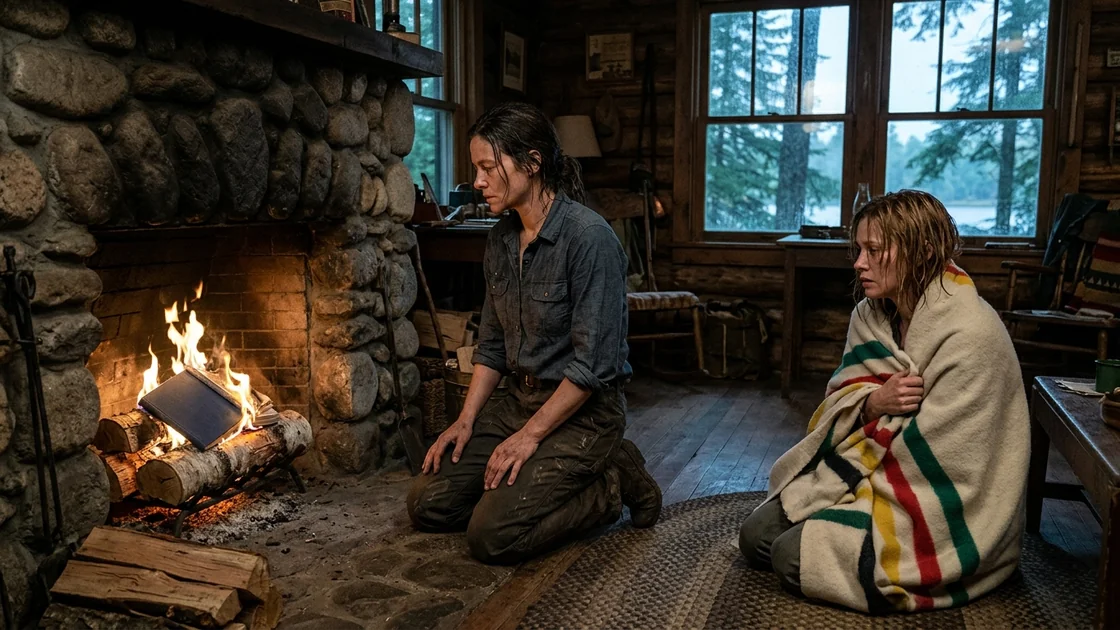
This story chronicles the return of Clara Vance to Camp Tamarack, the woodland sanctuary of her youth where she has accepted the position of executive director twenty years after being cast out in disgrace. As she labors to revive the crumbling lakeside institution before the arrival of hundreds of summer campers, she is forced to work directly with Rowan Sterling, her former inseparable companion whose cowardly lie destroyed Clara's reputation and altered the course of her entire life. Through the pressures of summer operations, a devastating mountain storm, and the shared isolation of the director's lodge, both women must finally dismantle the mythologies of their youth and reckon with the lingering cost of an ancient betrayal.
The two-lane blacktop of Route 9 narrowed four miles north of the county line, squeezed between encroaching hemlocks and the jagged slate cuts of the ridge. Clara Vance kept both hands pressed firmly against the cracked leather of the steering wheel, watching the odometer turn over with a dry, rhythmic click. The station wagon she drove was twenty years old, its suspension groaning over frost heaves, but it was paid for, and it carried everything she owned: three canvas duffel bags, two crates of ecological field guides, a box of kitchen supplies, and a steel lockbox containing the signed contract from the Tamarack Lake Conservancy.
She passed the rusted shell of the old Sinclair station, its pumps long removed, the lot choked with sumac and Queen Anne’s lace. Nothing along the state highway seemed to have changed except to surrender further to the damp Adirondack soil. Then came the turnoff, unpaved and unmarked except for a split-log archway sagging under the weight of wet green moss.
Camp Tamarack for Girls. Founded 1928.
The carved wooden sign had lost its gilt lettering decades ago. The letters were now gray hollows, inhabited by carpenter ants and lichen. Clara eased the car over the cattle guard. The hollow clatter of the iron pipes beneath her tires resonated through the frame of the car—a distinct, double-toned cadence that caused her throat to tighten involuntarily. For seven consecutive summers, between the ages of eight and fifteen, that hollow rattle had sounded like freedom. It had meant two months without her mother’s anxious silences, without the suffocating confines of their two-bedroom apartment behind her uncle’s dry-cleaning shop in Troy, without the shame of secondhand sneakers and free-lunch tickets.
Now, at thirty-five, the sound tasted of iron and cold lake water.
She drove down the access road at ten miles per hour. The pines rose forty feet above her, their lower branches dead and skeletal, filtering the late-afternoon sun into thin, dusty shafts. Through the trunks to her right, the lake finally appeared: Tamarack Lake, two miles across, its surface dark as slate and entirely still. Across the water, the granite face of Mount Moriah caught the dying light, glowing a brief, bruised purple before the shadows swallowed it.
The main camp opened before her in a sprawling horseshoe of timber-framed structures. The dining hall, with its river-stone chimney and screened wrap-around porch; the rows of camper cabins descending toward the crescent beach; the craft barn; the boathouse resting on cedar pilings over the water; and, at the crest of the hill, overlooking the parade grounds, the Director’s Lodge.
Clara parked beside the flagpole. When she killed the engine, the silence was immediate and immense, broken only by the tick of cooling metal and the solitary whistle of a white-throated sparrow somewhere up in the paper birches.
She stepped out into the June air. It was cool, damp, smelling precisely as it always had: balsam fir, wet granite, wood smoke, and the faint, sweet decay of pond lilies decomposing in the cove. She closed her eyes and took one breath—only one—allowing the sensory memory to wash through her like an electric shock before she forced her shoulders down, reached into her coat pocket for the brass ring of keys the board had mailed her, and walked toward the office.
A man was sitting on the low stone wall beside the administration porch, stripping bark from a birch twig with a thumb knife. He was thick-shouldered, dressed in faded canvas work pants and an olive wool sweater mended at both elbows with waxed thread.
"You're late," he said without looking up.
"The ferry at Crown Point had engine trouble," Clara said, stopping at the foot of the stairs. "Arthur?"
The man closed his knife with a clean snap and slipped it into his pocket. He looked at her then, his eyes small, pale, and deeply creased by decades of glare off the water. Arthur Phelan had been the head of grounds and maintenance when Clara was a camper. Then, his hair had been dark iron; now, it was the color of wood ash, and he walked with a pronounced hitch in his left hip.
"You don't look like your aunt," Arthur said, studying her face.
"My aunt was an administrative director in Albany. She rarely left her desk."
"She didn't know the difference between a water pump and a latrine pit," Arthur agreed, standing up with a grunt. "I told the board they were fools to try and open this place back up after two years dark. The plumbing in Cabin Four is shot. The raccoons took over the boathouse ceiling, and three hemlocks came down across the archery range during the ice storm in March. We got two weeks before the counselors arrive, and three weeks before ninety-six girls show up expecting hot water and a dock that doesn't sink."
"Then we'd better start with the water pump," Clara said evenly. She extended her hand.
Arthur looked down at her palm. It was calloused, scarred across the knuckle of the left forefinger from an incident with an auger during her graduate work in Montana, and completely devoid of jewelry. He gave it a single, rough squeeze.
"Keys are in the office," he said. "Power's on, but the line to the lake pump has a short somewhere between the transformer and the cove. You want tea?"
"Coffee, if it's black," Clara said. "And the roster for the executive committee."
Arthur stopped at the threshold of the screen door, his hand on the spring. He turned his head slightly, not quite meeting her eyes. "You already know who's on the committee, Clara. Don't play the greenhorn with me."
"I know the names on the letterhead," she replied, keeping her voice light, flat, and professional. "I want to know who signs the checks, who shows up to inspect the grounds, and who has the keys to the deed safe."
"Rowan does," Arthur said plainly. "Her daddy left her the estate when he passed two winters back, and she took over his seat on the conservancy board. She’s the chair of the property trust now. If a board rots or a shingle flies off this camp, it comes out of the Sterling ledger. She was here yesterday morning, looking at the docks."
Clara kept her hands steady at her sides. "Did she know I took the post?"
"She was the one who cast the deciding vote," Arthur said, and let the screen door slam shut behind him.
The Director’s Lodge was built of notched spruce logs, set upon a foundation of mortar and fieldstone gathered from the lake bed eighty years ago. Inside, the air smelled of mouse droppings, cold ashes, and lemon oil that had dried to a brittle glaze on the pine paneling.
Clara set her bags down in the small bedroom off the rear parlor. The mattress was covered in gray ticking, bare and thin. Through the uncurtained sash window, she could see down through the trees to the Council Ring—a circular clearing ringed by tiered logs, centered around a blackened fire pit ringed with river stones.
She sat on the edge of the bed and pressed her palms against her knees.
Twenty years.
In the summer of her fifteenth year, this room had been the sanctum of Mrs. Eleanor Hallowell, a woman who possessed the voice of an archangel and the disciplinary precision of a Prussian magistrate. To be summoned to this lodge had been an event of supreme gravity. Clara had stood on the braided rug in the front parlor twice: once to receive the junior leadership medal at the end of her fourteenth summer, and once on a rainy Tuesday morning in August of 1998, with the sheriff’s deputy standing by the stone hearth and her packed trunk sitting outside in the mud under the eaves.
She stood up abruptly, unable to remain still.
In the office down the hall, she found the steel filing cabinets unlocked. She turned on the overhead fluorescent fixture; it flickered, hummed like a hornet, and finally caught, casting a clinical, bluish light across the yellowed pine walls. The files were organized chronologically. She pulled the drawer for the late nineties, running her fingers over the tabs until she reached 1998.
The folder was thin. Inside was the standard administrative summary: camper numbers, kitchen expenditures, staff certifications. But behind the final page, clipped with a rusted steel pin, was the disciplinary log.
Her name was there, entered in Mrs. Hallowell’s flawless Palmer script:
Vance, Clara. Grade 10. Troy, NY. Scholarship Recipient (Sterling Foundation). Infraction: Theft of operational funds from the administrative office safe ($420.00); destruction of camp property (arson attempt at the Old Boathouse); willful violation of camp trust. Action: Dismissal from Camp Tamarack. Immediate revocation of future scholarship aid. Escorted from premises August 14.
Clara looked at the words for a long time. There was no mention of the journal. There was no mention of the pages torn from its binding and pinned to the bulletin board outside the mess hall, exposed to the cruel, laughing eyes of sixty adolescent girls. There was no mention of Rowan Sterling standing behind Mrs. Hallowell’s desk, her golden hair pulled back in a neat French braid, her pale blue eyes wide with sorrow and manufactured tears as she said, I saw her take the tin from the drawer, Mrs. Hallowell. I tried to stop her, but Clara said she needed the money for her mother’s rent. She told me if I told anyone, she’d burn the boats.
Clara closed the folder. She did not slam the drawer; she slid it shut with deliberate care until the latch clicked into place.
She went outside onto the porch. Night had fully fallen over Tamarack Lake. The stars were sharp, cold needles above the ridge, reflected with terrifying precision in the black mirror of the water. Down at the maintenance shed, a yellow bulb burned beneath the eaves, and she could hear the rhythmic clink of Arthur’s wrenches as he worked on the pump assembly.
She did not hate Rowan Sterling. Hatred was an active fire that required fuel, and Clara had spent two decades starving it out of existence. What she felt, sitting on the top step of the lodge while the lake wind chilled the sweat on her neck, was a profound, icy curiosity. Rowan had everything: the town house on Boston’s Beacon Hill, the family compound on the western point of the lake, the trust fund, the ease of carriage that came from three generations of people who had never had to ask what an item cost.
Clara had possessed only two things that summer: a sharp, hungry intellect that had earned her the camp’s sole full-ride scholarship, and her privacy. Rowan had taken both before breakfast on an ordinary Tuesday.
The revocation of the Sterling scholarship had followed Clara back to Troy. Without it, the private academy that had offered her a provisional place rescinded its acceptance. She spent high school at Troy High, dodging fights in the stairwells, working thirty hours a week at the Price Chopper checkout to help pay her mother’s medical bills after the kidneys began to fail, studying by the glow of the laundromat dryers. She had fought her way out—to the state university, to field research grants, to seasonal posts in northern Maine, Michigan, and the Canadian Rockies—building a career out of wilderness logistics, trail maintenance, and youth ecology programs.
When the Tamarack board’s search committee had contacted her in February through an agency in Burlington, she had almost deleted the email. But then she read the postscript from the conservancy: The board seeks a director with extensive field experience to prevent the camp from being subdivided into luxury private parcels.
They were going to lose the lake. The Sterling family trust was bleeding capital, and the developers were circling like pike beneath the lily pads.
Clara had signed the contract. She told herself it was for the six hundred acres of old-growth hemlock and the rare bog orchids on the north inlet. She told herself it was a legitimate professional milestone.
She stood up from the porch, shivering as a gust came off the water. She was lying to herself, and she knew it. She had come back because she wanted to see what kind of person Rowan Sterling had become once the audience of giggling girls was gone.
The first board meeting was set for ten o’clock on Thursday morning in the dining hall.
Clara spent the intervening thirty-six hours working shoulder-to-shoulder with Arthur. Together, they cleared two downed spruce trees from the access trail, rebuilt the foot valve on the lake water intake, and scrubbed three years of grease from the institutional ranges in the kitchen. Her muscles burned with familiar, honest exhaustion; her hands were stained with motor oil and wood pitch. She did not change into business attire for the meeting. She wore her clean work trousers, her Red Wing boots, and an ironed chambray shirt with the sleeves rolled to the elbows.
The board members arrived in two late-model SUVs from the county seat. There were five of them: Dr. Robert Miller, a retired pediatrician from Saratoga who had served as the camp doctor during Clara’s youth; Evelyn Cross, a wealthy patron from Glens Falls whose granddaughters were registered for the second session; two local attorneys who handled the conservancy’s legal filings; and Rowan.
Clara was standing behind the heavy oak table at the front of the dining hall, laying out the proposed operational budget and the revised fire safety maps, when the heavy oak screen door swung open.
The light fell behind Rowan Sterling as she entered, outlining her tall, slender frame. She had cut her hair; it fell to her collarbones in a sleek, honey-toned bob that curled slightly at the tips. She wore a tailored cream wool cardigan over a silk shirt and dark slacks, carrying a leather folio under her arm. She moved with that same unhurried, languid grace that had once made every counselor between eighteen and twenty-four treat her like an equal rather than a camper.
Her face had aged, but it had aged the way money ages: fine lines at the corners of her eyes smoothed by discreet care, her skin golden and scrubbed, her features sharp and aristocratic.
"Good morning, everyone," Rowan said. Her voice was lower than Clara remembered, rounded by the finishing schools of Connecticut and the social circuits of the Eastern Seaboard, yet beneath it lay that unmistakable, clear ring—like a silver bell dropped on flagstones.
Dr. Miller hurried over to Clara, his hands outstretched. "Clara! My goodness, look at you. Twenty years! When the search committee forwarded your portfolio, I told them, That’s our girl. Your paper on Adirondack watershed reclamation in the Forestry Quarterly was magnificent."
"Thank you, Dr. Miller," Clara said, smiling warmly at the old man. His hair was entirely white now, but his handshake was still vigorous. "It’s good to see you. The infirmary looks remarkably solid; Arthur kept the roof patched."
"Arthur’s a saint," Evelyn Cross piped up, settling into a chair with a heavy sigh. "Now if only he could do something about the road. My chassis was rattling for twenty minutes."
"We'll have the grader over the access road before the buses arrive," Clara said smoothly.
Then she turned her eyes across the table.
Rowan was standing five feet away. She had not sat down. She was looking at Clara, her chin lifted slightly, her blue eyes wide and still. There was no terror in them, nor was there shame. Instead, Clara saw a flicker of profound calculation—a woman rapidly assessing the terrain, measuring the incline, looking for the foothold.
"Hello, Clara," Rowan said softly.
The room grew very quiet. Dr. Miller cleared his throat and busied himself with his spectacles, suddenly aware of the air pressure dropping in the room.
"Rowan," Clara said. Her voice was steady, perfectly modulated, neither cold nor familiar. "Thank you for making the drive from the point."
Rowan held out her right hand. It was manicured, the nails short and buffed to a natural shine, a thin platinum band on her middle finger. "I wouldn't have missed it. When the committee presented your credentials, I told them you were uniquely qualified. You know Tamarack better than anyone we could have hired from the outside."
Clara took the hand. The skin was soft, warm, and dry. The contact lasted precisely two seconds—the professional standard—before both women released the grip simultaneously.
"Shall we look at the numbers?" Clara asked, gesturing toward the chairs. "We have twenty-two days until the first session begins. The physical plant requires nine thousand dollars in immediate repairs before the county health inspector arrives on the seventeenth. If we don’t clear that hurdle, the state will withhold our operating permit, and we won't open at all."
For the next two hours, Clara commanded the room.
She did not yield the floor. She walked them through the water testing results from the deep well, the necessary updates to the kitchen’s commercial grease traps, the staffing ratios, the lifeguard certifications, and the insurance riders required for the wilderness tripping program. She presented three distinct balance sheets: one for bare survival, one for break-even, and an aggressive plan for capital investment that relied on small, targeted grants from regional conservation bodies rather than the Sterling trust alone.
The two attorneys nodded in steady approval. Dr. Miller took enthusiastic notes. Evelyn Cross looked relieved that someone else was handling the details.
Rowan said little. She kept her folio open, a Montblanc pen poised in her fingers, writing small, precise annotations in the margins of Clara’s handouts. Whenever Clara looked in her direction, Rowan met her gaze with an expression of polite, attentive neutrality.
When the meeting adjourned, the others filed out toward the gravel lot, eager to beat the midday traffic back toward the Northway. Rowan remained in her seat at the end of the long pine table.
"You're very impressive, Clara," Rowan said into the empty room. The sound of the departing cars faded down the road, leaving only the hum of the lake breeze against the window screens. "You always were. You were the only girl in Cabin Seven who could read a topographic map without moving her lips."
Clara stacked her folders neatly. "I learned because if I got lost in the woods, no one was coming to find me."
Rowan gave a dry, soft laugh. "Still defensive."
"Realistic," Clara corrected, tapping the edges of the papers against the wood. "There's a difference."
Rowan stood up, smoothing the front of her cardigan. She walked over to the tall windows that looked down toward the water. The sun was high now, turning the surface of Tamarack Lake into a sheet of hammered brass.
"My father left the camp's endowment in a shambles," Rowan said quietly, her back to Clara. "He made investments in real estate that dissolved after 2008. The board thinks we have an infinite cushion because my last name is Sterling. We don't. If this summer isn't profitable—if we don't bring the alumni base back and prove that Tamarack can sustain itself—the trustees will force a sale in October. The developers want to tear down the cabins and put thirty luxury homes along the shoreline. They've already drawn the parcel maps."
Clara paused, her hand resting on the leather cover of her planner. "Why are you telling me this?"
Rowan turned around. Her face was shadowed against the bright glare of the lake. "Because you love this place. You always loved it more than I did. I loved the idea of it—the singing, the ribbons, the way everyone looked at me when I carried the torch at the final banquet. But you loved the dirt. You loved the swamp on the west ridge. If anyone is stubborn enough to keep the gates open on a shoestring budget, it’s you."
"And what happens to you if they sell?" Clara asked.
"I get my share of the land value," Rowan said without hesitation. "It would solve a great many problems in my life. But I didn't vote against you, Clara. When Miller brought your name forward, the others were hesitant. They remembered the incident. They remembered what was in the record."
Clara felt a cold, sharp blade twist behind her ribs. "Did you tell them what really happened, Rowan?"
Rowan did not blink. Her posture did not shift. "I told them that youth is complicated, and that twenty years is a very long time. I told them you were an adult of unimpeachable character."
"You lied for yourself then," Clara said, her voice dropping to a harsh whisper that cut through the cavernous room. "And you lied for yourself now. You didn't approve me out of charity or justice. You approved me because you knew I’d work eighty hours a week to keep the bulldozers off this land, saving your family’s legacy while you decide whether to cash out or play the great benefactress."
Rowan picked up her folio from the table. She walked toward the screen door, pausing when she was level with Clara. For the first time, Clara smelled her perfume: something cool, green, and expensive, smelling like cut stems and white lilies.
"You always had a dramatic imagination, Clara," Rowan said, her tone cool and measured. "I will be back on Tuesday with the conservancy’s legal counsel to review the shoreline easements. Please have the maintenance receipts ready."
The screen door banged shut behind her. Clara stood by the table until the sound of Rowan’s car engine died away into the hemlocks.
The counselors arrived on a Sunday afternoon in a flurry of overloaded sedans, acoustic guitars, and youthful noise that temporarily banished the ghosts from the birch groves. They were nineteen, twenty, twenty-one—college girls from Dartmouth, Middlebury, and Syracuse, full of unearned confidence and nervous energy.
Clara threw herself into orientation with military precision.
She taught them how to identify deadfall before pitching tents on the backcountry trails; she ran them through capsizing drills in the cold waters of the cove until their lips were blue and their strokes were clean; she reviewed the allergy protocols and the camper homesickness routines. She was up at five every morning, checking the chlorination in the pool, reviewing food orders with Mrs. Gable—the sixty-year-old camp cook who ruled the pantry with an iron ladle—and walking the perimeter trails with Arthur.
By the time the yellow school buses carrying ninety-six campers ground their gears up the access road, Clara’s boots were caked in mud, her skin was tanned dark, and her hands were steady.
Among the campers was a ten-year-old girl named Chloe Martin.
Chloe was a scholarship recipient from south of Utica. Her father drove her up in an eight-year-old hatchback that had a plastic sheet taped over the rear passenger window. The girl stepped out onto the grass clutching a canvas bag with broken zippers, wearing an oversized Tamarack T-shirt that had clearly been purchased from a thrift shop or handed down through three cousins. She had wild, dark curls pulled into a crooked ponytail, and her eyes were wide with terror as the daughters of Westchester and Boston tumbled out of the air-conditioned buses in matching brand-name fleece jackets and color-coordinated trunk sets.
Clara watched from the porch of the office as Chloe was assigned to Cabin Heron.
A tall, blonde girl with an immaculate duffel bag—a girl named Beatrice, whose mother was a college classmate of Rowan’s—was already claiming the best bunk near the window, surrounded by three friends who were loudly comparing their summer riding schedules. Chloe stood by the door of the cabin, her fingers white where she gripped her torn canvas bag, shrinking into herself like a snail pulled from its shell.
Clara walked down the hill. She entered Cabin Heron, nodding politely to the two young counselors who were struggling to untangle a pile of clipboards.
"Chloe?" Clara said.
The girl flinched, looking up. "Yes, ma'am?"
"I’m Clara Vance, the camp director," she said, crouching down so her eyes were level with the girl's. "I need someone who knows how to spot red-spotted newts to help me check the nature trail tomorrow morning before the bird-watching elective. Arthur tells me there are some down near the hemlock bridge. Are your boots waterproof?"
Chloe looked down at her scuffed canvas sneakers. "No, ma'am."
"Neither are mine," Clara lied, though she was wearing three-hundred-dollar Gore-Tex field boots. "We’ll stop by the outfitter shed after dinner and find you a pair of rubber work mucks from the surplus rack. Pick a bottom bunk, Chloe. The top bunks get all the pine beetles when the wind comes off the ridge."
Beatrice and her circle quieted, looking at Clara with sudden, wary respect. Chloe let out a long breath, her shoulders dropping two inches.
"Okay," Chloe whispered. "I can do that."
Clara stood up, met the eyes of the young counselor in charge of the cabin, and gave a single, firm nod that clearly communicated: Watch this girl, or answer to me.
That night, after the campfire had burned down to glowing embers and the camp songs had drifted away across the water, Clara sat at her desk in the lodge. She had left the windows open to catch the lake breeze. The sound of crickets was deafening, punctuated by the occasional hollow thrum of a bullfrog in the shallows.
A soft knock came at the outer door.
Arthur stood on the porch, a flashlight tucked under his arm. He held a square, flat package wrapped in brown butcher paper, tied with green garden twine.
"Courier left this at the front gate box," Arthur said, handing it to her. "Addressed to you. Marked personal."
Clara took it. The handwriting was unmistakable: small, elegant, perfectly vertical Palmer script, written with dark blue fountain pen ink.
For Clara.
"Rowan?" Clara asked.
Arthur spat into the ferns beside the steps. "She drove up herself around five, dropped it in the box, and drove straight back toward the point. Didn't even slow down to wave at the gate."
"Thanks, Arthur."
"Don't stay up all night with the paperwork, Clara. You look like a ghost walking the dock."
"Goodnight, Arthur."
Clara took the package inside, closed the door, and carried it to the desk. She used her pocketknife to cut the twine. The brown paper peeled away to reveal a cloth-bound book, its cover faded from navy blue to the dull, powdery shade of slate.
It was her journal from the summer of 1998.
Clara’s breath seized in her throat. She did not touch the cover immediately; she stared at it as if it were an unexploded shell pulled from a riverbed. On the front, written in her own adolescent hand with a black grease pencil, was her name: Clara Vance. Tamarack 1998. Private.
She opened it.
The pages were water-stained, cockled by long exposure to dampness. The binding had been mended with strip of archival linen tape along the spine. Clara turned the pages slowly, her heart beating with heavy, dull thuds against her ribs.
July 12: Rowan let me wear her yellow sweater to the dance with the boys from Camp Sagamore. She told me I have better cheekbones than her sister. We hid behind the boathouse and smoked one of her brother’s cigarettes. It made me sick, but Rowan laughed and held my hair when I coughed.
July 28: I told Rowan about my mother’s hospital bills. I told her about the collection notices that come in the yellow envelopes. She looked at me strange—like she was sorry, but also like she was looking at an animal through a fence. She asked me if we were poor. I told her we weren't poor, we were just broke. She said her father says broke is just poor without the manners.
August 3: Rowan’s mother came for Visitors’ Day. She smelled like gin and mints at eleven in the morning. She screamed at Rowan in the parking lot behind the crafts shop because Rowan had lost her silver signet ring. She told Rowan she was clumsy, useless, and had her father’s weak mouth. Rowan didn't cry while her mother was yelling, but when they left, she ran into the woods behind the rifle range. I found her by the big glacial boulder. She was biting her own arm to keep from screaming. I held her until her ribs stopped shaking. She made me promise I would never tell anyone. She said, 'If you ever tell, Clara, I’ll kill you.' She was laughing when she said it, but her eyes were black.
Clara turned to the final pages.
There were the ragged stubs where three leaves had been ripped violently from the binding. Those were the pages that had contained Clara’s rawest, most humiliating adolescent admissions: her terror of being sent back to the public high school, her desperate longing to be accepted into Rowan’s world, and her private, blistering observations about the vanity and hypocrisy of the other girls in their cabin. Those were the pages that Rowan had pinned to the dining hall bulletin board on the morning the four hundred and twenty dollars went missing from the director’s safe.
Tucked into the back of the book was a single sheet of cream stationery, bearing the engraved letterhead of The Sterling Cottage, Tamarack Lake.
Clara, I found this in my father’s desk in Boston while clearing his estate. I did not destroy it, though I know you will believe I kept it as a trophy. I kept it because it is the only true record of that summer that exists. We have the budget hearing on the twenty-second. The developers have submitted a formal purchase offer to the trust: 4.2 million for the lakefront, excluding the bog. They have two board members in their pocket. Miller is wavering because the camp’s liability insurance has tripled. If we cannot show a clear path to solvency by August 1st, they will call a vote. R.
Clara folded the letter, slid it back between the yellowed leaves, and closed the book.
She did not cry. The tears for that humiliation had been wept twenty years ago into the thin pillow of her bed in Troy, while her mother sat in the kitchen below, balancing checkbooks that would never balance and wondering what her daughter had done to deserve such disgrace.
Clara picked up the book, walked to the cast-iron woodstove in the corner of the parlor, and opened the door. Inside lay the kindling and dry birch logs she had laid for the evening chill.
She held the journal over the dark opening.
A single strike of a match would turn it to white ash. The record of her shame, of Rowan’s cruelty, of that entire poisoned summer would vanish into the flue, carried out over the hemlocks and scattered across the water.
Her hand hovered for thirty seconds.
Then she closed the stove door, walked back to the desk, and locked the journal in the steel drawer beside the administrative ledgers.
July came to Tamarack Lake with relentless, suffocating heat.
The air grew heavy and motionless, trapped in the bowl of the mountains. The surface of the lake turned into a sheet of warm glass, scummed with pollen and green algae along the western bays. The campers grew irritable; minor feuds erupted over laundry, canteen credits, and who sat next to whom at lunch.
Clara was everywhere.
She ran the morning flag ceremony at seven, led the ecology trail walks at nine, inspected the kitchen sanitation at eleven, and spent her afternoons in the bilge of the camp’s two passenger launches, rebuilding carburetors that choked on modern ethanol-blended gasoline. Her hands were permanently nicked, her face dark from the sun, a line of white dust settled into the creases of her forehead.
Rowan appeared every Thursday.
She arrived promptly at nine, dressed in crisp linen shirts and dark trousers, carrying her leather folio. She inspected the books with the cold efficiency of a forensic accountant. She questioned every line item: the cost of replacement life vests, the purchase of new archery targets, the emergency overtime paid to Arthur when the septic line in Cabin Nine backed up.
"You're spending too much on the kitchen," Rowan said during the third week of July, sitting across from Clara in the small, stifling office. The desk fan hummed between them, merely circulating the hot, pine-scented air. "Mrs. Gable is ordering organic produce from the cooperative in Westport. We can get frozen sysco deliveries for forty percent less."
"The Sysco truck won't come up the road until we grade the upper culvert," Clara said without looking up from her maintenance log. "And the girls are eating fresh food. The food is why twenty-two families from Albany have already put down deposits for next summer."
"Next summer doesn't exist if we can't pay the insurance rider next week," Rowan snapped, her voice losing its habitual polished detachment.
Clara laid her pen down. She looked at Rowan.
The heat was telling on Rowan, too. A thin sheen of perspiration glistened along her hairline, and there were dark, purplish hollows beneath her eyes that no foundation could fully disguise. Her mouth was set in a tight, bitter line.
"What's wrong, Rowan?" Clara asked quietly.
"Nothing is wrong. I am trying to keep this institution from bankruptcy."
"Your father’s estate is insolvent, isn't it?" Clara said, her voice completely even. "Not just the camp trust. The whole thing. The Boston townhouse is mortgaged to the hilt, and the cottage on the point is tied up in probate with your brother’s creditors."
Rowan’s hand froze over her legal pad. Her eyes narrowed to cold points. "Who told you that?"
"Arthur hears things from the marina," Clara said. "And I know how to read a county deed register. You don't want the developers to buy this place because they're offering thirty cents on the dollar for the notes your father held. If they buy it, you get nothing. If the camp survives and the conservancy takes over the land trust through a state conservation easement, the state pays out full market value for the development rights, and that money goes directly to the primary lienholder. Which is you."
The silence in the room was absolute. Outside, down on the beach, the sharp, shrill whistle of a lifeguard signaled the end of the general swim period. The distant laughter of children sounded thin and fragile against the heavy, thunderous pressure of the afternoon air.
Rowan slowly leaned back in her chair. The mask did not drop entirely, but it cracked, revealing the raw, frantic panic beneath the bone structure.
"Does it matter?" Rowan whispered. "Does it matter why I need the easement to go through, Clara? The result is the same. The land is protected. The camp stays open. The trees don't get cut down. Why do you care if it saves me from ruin in the process?"
Clara stood up from her desk and walked to the window. Across the parade grounds, she could see Chloe Martin walking beside Beatrice. The two girls were carrying an aluminum canoe between them, their heads bent together, laughing at some private joke. Chloe was wearing her rubber boots, despite the eighty-degree heat, her head held high, her shoulders back.
"I care because you haven't changed at all," Clara said. "You still use people like structural timber. You build your house out of them, and when the fire comes, you run out the front door and let them burn inside."
Rowan rose from her chair, her face white despite the heat. "You have no idea what my life was like."
"I read the journal, Rowan. I remembered what your mother was."
"You don't know the half of it!" Rowan’s voice broke, rising to an ugly, ragged pitch that shocked them both. She gripped the back of the wooden chair, her knuckles turning ivory. "My mother didn't just yell, Clara. She took a riding crop to my shoulders when I didn't place in the dressage trials. She locked me in the cellar at the cottage for twelve hours because I spilled ink on her linen sofa. My father knew. He sat in his study with his bourbon and turned up the phonograph so he wouldn't hear me kicking the door!"
Clara did not move. She remained by the window, watching the two girls carry the canoe down to the cedar racks.
"And when she came to the camp that day," Rowan continued, her breath coming in ragged, shallow gasps, "she told me if I didn't come home with the Best Camper cup—if I brought home another mediocre report—she was sending me to the reform school in Rhode Island. The one where they didn't let you have visitors. The one with the barred windows."
"So you stole the money from the safe," Clara said.
"I didn't steal it to keep it!" Rowan cried, tears finally spilling over her lashes, hot and ugly. "I took it because I was going to run away. I had a ticket for the bus to Montreal. I went to the boathouse to get my bag, and you were there. You caught me. You asked me what was in the envelope."
"And you panicked," Clara said.
"I panicked," Rowan whispered. "You were so good. You were so damn good at everything. You didn't have anything—you lived in three rooms behind a laundry—and you were happy. You could sleep through the night without waking up screaming. Everyone loved you. Mrs. Hallowell looked at you like you were her own daughter. I knew if I told her, she'd send me away. But if you were the one... you had the scholarship. You were poor. People expect poor people to steal, Clara! They expect them to fall apart!"
The words hung in the hot, stagnant air of the office like sulfuric acid.
Rowan stood trembling, her hand pressed against her mouth as if she could pull the words back into her throat. Her eyes were wide with a terror that was twenty years old, fresh and bleeding as if no time had passed at all.
Clara looked at her.
She had waited twenty years for this confession. She had imagined it in the cold winters in Troy; she had imagined it while working trail crews in the Bob Marshall Wilderness, swinging a pulaski until her palms bled; she had imagined it while sitting in academic halls listening to people discuss social mobility and institutional equity. She had wanted Rowan Sterling on her knees, broken, begging for forgiveness, acknowledging the enormous, casual cruelty of her crime.
Now Rowan was standing there, broken, small, and utterly pathetic.
And Clara felt nothing. No surge of triumph. No righteous vindication. Only a profound, hollow weariness, like looking at an old foundation where a house had burned down so long ago that the nettles and blackberry briars had covered the stones.
"The storm is coming," Clara said, glancing out the window toward the western ridge.
The sky over Mount Moriah had turned the color of bruised plums. The wind had suddenly picked up, rattling the dry screens of the lodge, smelling sharply of ozone and cold rain.
"Clara—" Rowan started, her voice shaking.
"Pack your papers, Rowan," Clara said, her tone reverting to that calm, flat, terrifying administrative authority. "The squall line is moving fast. If you don't get across the causeway in ten minutes, the water will be over the road, and you’ll be trapped here until morning."
The storm hit Tamarack Lake with the ferocity of a hurricane trapped in a canyon.
It struck at four in the afternoon. The temperature plummeted twenty degrees in fifteen minutes. The wind came screaming down off Mount Moriah, whipping the lake into four-foot waves that smashed against the cedar pilings of the boathouse, sending plumes of brown foam twenty feet into the air.
Then came the rain.
It was not a shower; it was a deluge that obliterated the landscape, turning the parade grounds into a sheet of brown water three inches deep within twenty minutes.
Clara moved with absolute, practiced efficiency.
She dispatched Arthur and two junior counselors to secure the waterfront, hauling the aluminum canoes up into the tree line and chaining them to the hemlock trunks. She ordered the entire camp population into the dining hall—the safest, most heavily timbered structure on the property, equipped with a commercial woodstove and an independent gravity-fed water line.
She stood at the dining hall door with a clipboard, checking off every single camper and counselor as they came running through the sheets of rain, soaked to the skin, laughing and screaming in adolescent excitement.
"Cabin Loon! All eight!"
"Cabin Beaver! All seven!"
"Cabin Heron!"
Clara’s pencil hovered. "Where is Chloe?"
The young counselor from Heron wiped wet hair from her face, her eyes wide with sudden panic. "She was right behind us! She went back to the washhouse to get her rain poncho!"
Clara handed the clipboard to Arthur, who was standing behind her in his yellow oilskin slicker.
"Keep them inside," Clara said. "Bar the doors if the wind gets worse. Don't let anyone out until I get back."
"Clara, you can't go out in that," Arthur shouted over the roar of the wind through the pines. "The dead limbs are coming down all over the ridge path!"
"She's ten years old, Arthur," Clara said, and stepped off the porch into the cataract.
The wind hit her like a physical blow. The rain was blinding, stinging her eyes and deafening her with a continuous, roaring hiss as it tore through the forest canopy. She fought her way across the parade grounds, her boots sinking into the saturated turf.
A heavy crack echoed through the gale—a sixty-foot white pine fifty yards away snapped halfway up its trunk, its top crashing down across the archery shed with a sickening crunch of splintering timber.
Clara did not stop. She reached the washhouse—a low concrete-block building set back in the hemlocks.
The door was swinging wildly on its hinges, banging against the concrete wall with rhythmic violence.
"Chloe!" Clara shouted, stepping into the dark, echoing interior.
A small sob came from the corner beside the utility sinks.
Chloe was curled into a ball on the concrete floor, her knees pulled to her chest, clutching her torn canvas bag. Water was pouring through a high vent above her, soaking her clothes.
Clara knelt beside her. "Chloe. Hey. It's Clara."
The girl lunged forward, burying her face into Clara’s wet wool coat, shaking violently. "The trees were falling! The noise—it sounded like a train!"
"I know," Clara said, wrapping her arms tightly around the small, trembling frame. "It's just the wind coming off the mountain. The dining hall is safe. It’s built of stone and twelve-inch spruce logs. Arthur has the stove going, and Mrs. Gable is making hot cocoa. We're going to walk together. Okay?"
Chloe looked up, her dark eyes red and terrified. "My boots are full of water."
"Then we'll take them off," Clara said. She stripped the girl’s heavy, waterlogged boots, pulled off her own dry wool socks from her field pack, slipped them onto Chloe’s feet, and swung the ten-year-old up onto her back. "Hold onto my neck. Tight. Don't let go."
Clara stepped back out into the fury of the storm.
Carrying the girl, her progress was slow. The path was already a rushing torrent of red Adirondack clay and pine needles. She kept her head down, leaning into the wind, watching the canopy above for falling widow-makers.
As she passed the administration office, she saw a car still parked beside the flagpole.
It was Rowan’s sedan.
A massive hemlock branch, six inches thick, had sheared off in the gale and lay across the hood, crushing the windshield into a spiderweb of shattered safety glass. The driver’s side door was open, swinging uselessly in the storm.
Clara’s heart seized. She looked toward the Director’s Lodge.
Through the lashing rain, she saw a figure standing on the covered porch of the lodge, clutching the stone railing.
Clara carried Chloe toward the dining hall, running the last fifty yards through the mud. Arthur met her at the door, hauling them both inside into the warm, dry, yellow light of the hall. The room was noisy with ninety girls singing camp songs, their voices thin and brave against the thundering roar of the storm outside.
Clara handed Chloe to Mrs. Gable, who wrapped the shivering girl in three wool blankets and shoved a mug of steaming cocoa into her hands.
"You stay here," Clara told Chloe, smoothing the wet hair from her forehead. "You're safe now."
Chloe nodded, her teeth chattering against the rim of the mug. "Thank you, Clara."
Clara turned to Arthur. "Rowan didn't leave."
Arthur looked toward the windows, where the rain was running down the glass in solid sheets. "Her car got crushed by the hemlock ten minutes ago. She ran up to your lodge. I tried to yell at her to come down here, but the wind took my voice."
"I have to go get her," Clara said, pulling her hood back over her head.
"The power lines are down across the path to the lodge!" Arthur grabbed her forearm, his grip iron-hard. "Clara, leave her be! The lodge is solid stone. She’s safer there than you are crossing that clearing again."
"The service line to the lodge hasn't tripped the main breaker yet," Clara said, pointing through the window toward the transformer pole behind the office. Sparks were leaping from the ceramic insulator, bright and violent against the dark rain. "If that branch takes down the transformer, the lodge attic will catch. Arthur, give me the wire cutters and the insulated gloves from the shed."
"Clara—"
"Give them to me!"
Three minutes later, Clara was back in the gale, carrying the heavy insulated lineman’s shears.
The climb up to the Director’s Lodge was treacherous. The earth had given way along the stone steps, turning the hillside into a slick, sliding mudfall. Twice Clara fell to her knees, scraping her hands against the sharp slate, but she hauled herself up by the roots of the mountain laurel.
She reached the high ground behind the lodge.
The secondary power line had torn free from the eaves and lay writhing in the wet grass like an incandescent serpent, hissing and spitting blue-white sparks into the mud. Ten feet away, the dry pine needles beneath the rear porch overhang were already smoldering, kept dry from the rain by the deep eaves, threatening to ignite the spruce log siding.
Clara did not hesitate.
She stood on a dry boulder, leveled the heavy shears at the dead side of the drop loop, and brought the handles together with the full weight of her body.
The arc flash was blinding, accompanied by a deafening CRACK that smelled of burned copper and sulfur.
The wire went dead. The hissing ceased, replaced only by the roar of the rain pounding against the roof shingles.
Clara dropped the shears, ran around to the front of the lodge, and kicked open the front door.
The lodge was dark. The power had failed across the entire basin, leaving the parlor illuminated only by the gray, watery light from the windows and the occasional flash of lightning.
Rowan was sitting on the floor in the corner beside the cold river-stone hearth.
She had her knees pulled to her chest, her arms wrapped around her shins, her silk blouse soaked and clinging to her shoulders. Her sleek hair was plastered to her skull, and her face was streaked with mud and mascara. When the heavy timber door slammed shut behind Clara, Rowan did not scream; she merely looked up, her eyes empty, glazed with the dull, paralyzed shock of someone who had reached the absolute end of her endurance.
Clara stood in the center of the room, her chest heaving, water pouring from the hem of her coat onto the braided rug.
"The transformer blew," Clara said, her voice rough and breathless. "The line was arcing near the dry rot under the eaves. It’s clear now."
Rowan did not move. She looked at Clara’s boots, then at her scarred hands, then at her face.
"Why did you come up here?" Rowan whispered. Her voice was cracked, hollowed out. "You should have let it burn. It would have settled everything."
Clara stripped off her soaked canvas coat and threw it over the back of an armchair. She walked to the hearth, picked up the iron poker, and knelt before the stove. She pulled dry kindling and birch bark from the copper wood-box, built a fast teepee over the grate, and struck a kitchen match from the tin on the mantel.
The yellow flame caught the birch bark, curling it into black lace, sending a sweet, sharp plume of wood smoke into the damp room. The fire crackled, took hold, and began to throw off a circle of steady, golden heat.
"I didn't come for you," Clara said, staring into the rising flames. "I came because this lodge was built by men who worked twelve hours a day in the granite quarries for two dollars a week. It belongs to the lake. It doesn't belong to you, and it doesn't belong to your family."
Rowan let out a jagged, wheezing sound that might have been a laugh or a sob. She buried her face in her knees.
Clara walked to the linen press in the hall, pulled out two heavy wool Hudson’s Bay blankets, and walked back to the hearth. She dropped one into Rowan’s lap.
"Dry yourself," Clara said.
Rowan did not touch the blanket. She remained curled in the corner, shivering so violently that her teeth clicked together in the silence between thunderclaps.
Clara let out a short, frustrated sigh. She sat down on the floor three feet away, reached out, unfolded the blanket, and draped it firmly around Rowan’s shoulders. Her hands were rough, warm, and steady.
As the wool settled around her, Rowan collapsed sideways.
She did not lean against Clara—she had too much pride for that—but she slumped against the fieldstone face of the fireplace, weeping with a terrible, silent intensity that shook her entire frame. It was not the theatrical weeping of the board room or the calculated grief she had used twenty years ago; it was the raw, ugly dissolution of a woman whose life had collapsed down to zero.
"There is no money," Rowan whispered into the stone. "There hasn't been for three years. The bank is foreclosing on the cottage next month. My husband left me in November. He took the accounts in the Caymans. He knew they were empty before I did."
Clara sat with her elbows on her knees, watching the firelight dance across the yellow pine logs of the wall.
"You could have told the truth," Clara said softly. "Twenty years ago. You could have told Mrs. Hallowell."
"She would have called my father," Rowan cried, turning her wet, ruined face toward Clara. "Don't you understand that? She would have called him, and he would have come up here in the Packard, and he would have taken me home, and..."
She stopped. She closed her eyes, swallowing hard.
"And what, Rowan?"
"He didn't just let my mother lock me in the cellar, Clara," Rowan whispered, the words barely audible over the drumming of the rain on the roof. "When she went to Saratoga... he came into my room. He told me I was his special girl. He told me if I ever told the headmistress or the doctors, he’d put my mother in the asylum and leave me on the street with nothing."
The silence returned to the lodge, heavier and colder than the Adirondack stone beneath them.
Clara did not move. She felt a profound, terrible weight settle into the room—a darkness so deep that the twenty-year-old anger she had carried seemed, in comparison, like a child’s toy left out in the grass.
She looked at Rowan Sterling: the girl who had had the silver ribbons, the yellow cashmere sweaters, the poise, the effortless cruelty that had severed Clara from her youth.
Rowan was not a monster. She was merely the mangled product of a different kind of slaughterhouse. She had survived by throwing Clara to the wolves because Clara had been the only person within arm's reach who didn't have the power to strike back.
It didn't make the lie noble. It didn't make the twenty years of struggle, the cold winters in Troy, the scrubbed floors, and the lost scholarships any less real. It didn't return the stolen years to Clara’s life.
But it stripped the glamour from the wound.
It made the betrayal ordinary. It reduced the great, defining tragedy of Clara Vance’s youth to an incident of pathetic, desperate cowardice by a terrified girl in a gold-plated cage.
"I'm sorry," Rowan said.
The words were small. They fell between them onto the braided rug like dry pine needles.
Clara turned her head and looked at her.
"I know you are," Clara said.
"Can you forgive me?"
Clara watched the birch logs burn down to red embers. The wind outside was beginning to lose its edge; the drumming on the shingles slowed from a roar to a steady, rhythmic patter. Down in the valley, through the trees, she could hear the faint, clear ring of the dining hall bell—Arthur signaling that the storm had passed and the all-clear was given.
"No," Clara said.
Rowan flinched as if she had been struck across the mouth.
"I'm not going to forgive you, Rowan," Clara said, her voice quiet, steady, and devoid of rancor. "Forgiveness is for things that can be repaired. You can't give me back the school I was supposed to attend. You can't give me back my mother’s peace of mind before she died. You can't undo the morning I had to stand by the flagpole while sixty girls watched the police carry my trunk to the road."
Rowan bowed her head, her shoulders shaking silently.
"But I’m not going to hate you anymore," Clara continued, standing up from the floor. Her knees cracked in the cool room. "Hating you has been like carrying an eighty-pound pack up a mountain I wasn't even trying to climb. I’m putting it down right here. In this room."
She walked to the desk, pulled the brass key from her pocket, and unlocked the bottom drawer. She took out the navy blue journal, walked back to the fireplace, and knelt down.
Rowan looked up, her breath hitching.
Clara did not look at the pages. She laid the book gently on top of the glowing birch logs.
The cloth cover resisted for three seconds, curling and turning brown at the corners. Then the paper caught. A clean, yellow flame leaped from the edges, illuminating the small hearth with sudden brightness. The water-stained pages, the lists of camp songs, the adolescent dreams, the record of Rowan’s bruises and Clara’s poverty—all of it flared into a brilliant, silent blaze that dissolved the ink into carbon and light.
They watched it burn together until nothing remained but a delicate, gray lattice of ash that collapsed into the grate with a soft shhh.
Clara stood up.
"The sun will be up in an hour," she said, looking toward the east window, where the sky was turning from black to the pale, milky gray of dawn. "The health inspector is still coming on Tuesday. Arthur and I have to clear the road before the milk truck gets here at seven."
Rowan slowly pulled the wool blanket tighter around herself. She looked down at the ash in the grate, then up at Clara.
"What happens to the camp?" Rowan asked.
"We save it," Clara said. "You're going to sign the conservation easement over to the state trust on Monday. You’ll take the settlement money and pay off your father’s debts. And then you’re going to resign from the board."
Rowan swallowed. "And if I don't?"
"You will," Clara said, her hand resting on the iron latch of the door. "Because you don't belong here anymore, Rowan. You never did. You were just passing through on your way to somewhere else."
Clara opened the door.
The morning air was cold, washed clean by forty thousand gallons of mountain rain.
The lake was completely still, a mirror of pale silver beneath a sky of washed turquoise. A low ribbon of white mist hovered over the water, slowly drifting toward the south cove where the lily pads grew thick and green. The smell of hemlock and wet stone was sharp and sweet, clearing the lungs like menthol.
Clara walked down the hill from the lodge.
Her boots were caked with mud, her hands were cold, and her shirt was damp against her ribs, but she walked with a long, loose, easy stride that made no sound on the wet needles.
At the edge of the parade grounds, Arthur was already at work with the chainsaw, clearing the branches of the fallen white pine from the roof of the archery shed. When he saw her coming, he cut the throttle, letting the saw idle down with a low, rhythmic sputter.
"Lodge survive?" he asked, wiping sweat and wood chips from his forehead with the back of his arm.
"Lodge is fine," Clara said. "Power line is cut clean. We'll need the electric company to run a new drop from the transformer pole before the second session."
Arthur looked at her closely, his pale, creased eyes searching her face in the early light. Whatever he saw there—or didn't see—seemed to satisfy him. He gave a single nod.
"Rowan?"
"She's resting," Clara said. "Her car’s totaled. She’ll need a ride to the bus station in Glens Falls this afternoon."
"I'll take her in the truck," Arthur said. "Don't mind the drive."
"Thanks, Arthur."
Down at the crescent beach, the screen doors of the dining hall banged open.
The campers spilled out into the clean morning light, their voices carrying across the water with the crystalline purity that only belongs to children in the woods after a storm. They ran down toward the docks, shouting and pointing at the mist rising off the lake, their sneakers kicking up small sprays of dew from the grass.
Among them was Chloe Martin.
She was running beside Beatrice, her dark curls flying wild behind her ears, wearing Clara’s wool socks pulled up to her knees inside her battered canvas sneakers. She reached the edge of the water, stopped, and looked across the lake toward Mount Moriah, where the rising sun was just beginning to strike the granite face, turning it from cold gray to blinding, triumphant gold.
Clara stopped at the foot of the flagpole.
She reached out and placed her palm against the rough, cold spruce timber of the mast. She could feel the vibration of the camp waking up around her: the clatter of Mrs. Gable’s cast-iron skillets in the kitchen, the distant hum of Arthur’s saw, the shrill whistle of a counselor testing the waterfront lines, and the laughter of the girls on the beach.
She was home.
Not because the past had been erased, and not because justice had been served with the neat, clean symmetry of an administrative report. She was home because the dirt belonged to her now. She had paid for it with twenty years of exile, and she had claimed it with her own two hands.
Clara took a deep breath of the pine-scented air, squared her shoulders, and walked down toward the docks to start the morning swim.